Bookeeping For E-Commerce Businesses
 

Bookeeping For E-Commerce Businesses

Bookkeeping is the recording of all financial transactions of a business. It is recommended that you keep a record of all expenses and revenues of your online business.

It is also recommended that you use accounting software, specifically one that tailors to e-commerce businesses. The best option will depend on your business and preferences; it will track sales, costs, and inventory. Xero and QuickBooks are popular accounting software.

Cash Flow

You should watch your cash flow, which is the money coming in and coming out of your business. Here is a basic example of a cash flow statement for an eCommerce business for the first quarter:
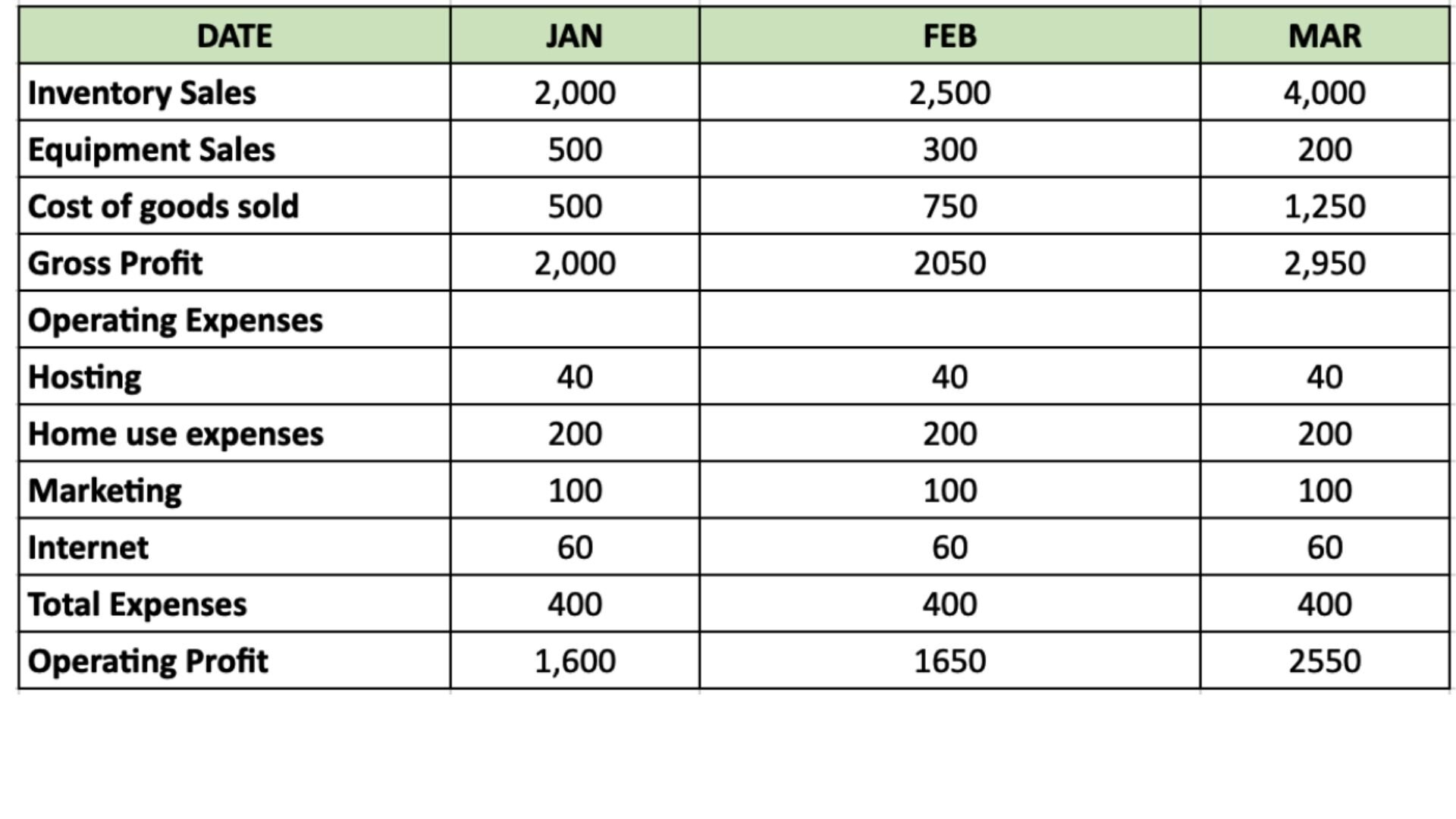
A cash flow statement is considered the most important document you can have as an eCommerce entrepreneur. When you know how much cash is flowing in and out of your online business, you can sustain a positive profit margin. On the other hand, if you experience a loss, your cash flow reflects where you need to budget or where you are overspending.

Balance Sheet

A balance sheet consists of assets and liabilities of the business. Both columns should be balanced. The purpose of a balance sheet is to measure the overall position of your business.

The balances must follow the accounting equation:

Assets = Liabilities + Owner’s Equity

(Owner’s equity is the money invested in the business by the owner.)

Income statement

The income statement includes all money brought in over a period. In the basic example above, this shows over a quarter. It shows operating and non-operating income, for example, your inventory sales, and equipment sales, therefore your primary income is your inventory sales.

VAT Threshold for E-commerce

The threshold for eCommerce businesses and selling from a physical store is the same. If you reach the turnover threshold of £85,000 per annum, you will need to register for VAT and charge tax on your goods sold to customers (20%). Therefore, you may need to increase your prices by 20% in order to maintain profit margins, but this may have the effect of customers being sensitive to the price change.

Potential E-commerce sales and delivery tax

The UK HM Treasury is considering applying a 2% sales tax for eCommerce businesses, as well as the 20% standard VAT rate. This is to level out the competition between high street businesses, who face higher operating costs, and online sales.

In addition to this, there could possibly be a delivery tax implemented in order to reduce pollution. This has the aim of influencing consumer behaviour and encouraging customers to environmentally friendly businesses.

Claimable expenses for E-commerce business

Allowable or claimable expenses are costs that are wholly and exclusively involved with the day to day running a business. This, therefore, excludes any costs incurred that are involved with your personal use.  As an eCommerce business, you can take advantage of multiple tax deductions on multiple claimable expenses.

Claimable expenses for eCommerce businesses may include:

·      Advertising and promotion - costs of promotion of your e-commerce business: Marketing (social media advertisements, sponsored advertisements, sponsored content fees by influencers, email marketing software) and Website related content (hosting, domain names, website subscriptions)

·      Banks fees

·      Cost of Goods Sold – the expense you pay as an online seller for manufacturing or selling a product: Materials, Labour (people involved in the production, not those hired for sales), Inventory (goods purchased for resale)

·      Use of home office expenses – must not include personal use, therefore you must proportion your business use and personal use of your home.

Capital Expenses

A capital expense is usually a large cost incurred in order to purchase an asset that you are expecting to have long use of life and benefit your e-commerce business. In this case, your capital expenses would be computers purchased and the website, as most websites provide customers with a system where they can purchase goods or services and contact your business. These are functions and qualify for capital allowances, as they fall into the ‘plant and machinery’ category:

·      Domain name

·      Hardware relating to the website

·      Operating software relating to the website

(You can also claim these as start-up costs for your e-commerce business)

This differs from a revenue expense as this is an amount that is expensed immediately and are used more in the day to day life of the business and is replaced more regularly, such as office stationery.

How to claim expenses for E-commerce businesses

If you are self-employed or a sole trader, employed or a partner at an e-commerce business, you can claim your allowable expenses through the HMRC Self-Assessment Tax Return. You can either file your tax return online or send a paper form, before the tax deadline.

You must have registered for the Self-Assessment Tax Return by the 5 October 2020, and pay the tax you owe by 31 January 2021

If you are filing your tax return online, you must send this by the 31 January 2021.

If you are filing a paper return, you must send this by 31 October 2020.

Contact us for support on your taxes


Make-up artist expenses and deductions
 

One of the first steps that we will take when looking at your accounts is ensuring that you are claiming absolutely every expense you are eligible to as a make-up artists. 

Make-up artists HAVE A NUMBER OF TAX DEDUCTIONS THAT ARE UNIQUE TO ANY OTHER INDUSTRY.

Below we have put together a list of some of the expense you are entitled to as a make-up artist. 

USE OF HOME AS AN OFFICE

As a make-up artist, it is not unusual to work with clients from your home or for other work-related activities. Use of home is a claimable expense that is all too often missed out, or inaccurately claimed.

You are able to claim a percentage of your household bills for your use of home as an office. This includes expenses on bills such as your mortgage/rent, electricity, heating and wifi


CLOTHING

Clothing can be an extremely useful expense to claim on your tax return. As a make-up artist you almost definitely spend some of your income on work-related clothing, whether it be clothing for meetings or comfy shoes to help you stand all day behind while working behind the scenes.

Clothing is definitely one of the more obvious expenses to claim. However for a smooth and painless tax-filing season every year, it is vital that you are aware of your entitlements when claiming this expense. Many make-up are subject to penalties and hold-backs due to over claiming. 


TRAVEL TICKETS

Part of the nature of being a make-up artist is moving from location to locations, working behind the scenes. All travel that is work-related is claimable against tax. Therefore flights, train-tickets and bus-rides to events are claimable. 

It is important to note that if your travel was partly personal-related, i.e. 5 days of your travel were taken as holiday, you must apportion the expense.

Work-related petrol and other motor costs are also claimable.


EQUIPMENT 

Perhaps on of the most obvious expenses to claim as a make-up artist is work-related equipment i.e. your make-up! This expense can, however, be stretched much further. For example, the equipment need to take a picture of your work for your portfolio.

Make sure you are identifying all work-related expenses on equipment. Equipment is defined as items that you intend to use for a prolonged period. Your do not include this in your business expenses but instead in an AIA (Annual Investment Allowance), which works to reduce the tax you pay. 

ADVERTISING

Getting your name seen and heard is a major part of being a successful make-up artist. Any methods you use to promote yourself in an effort to get ahead in your career is claimable. Whether you pay to be mentioned in an article or directory, run an ad campaign on your make-up blog or any other forms of promotion- it's claimable. 

Contact us to find out the many more expenses, deductions and reliefs you are entitled to as a make up artist

 
Understanding Student Loan Repayments for the Self-Employed

Understanding Student Loan Repayments for the Self-Employed

If you are self-employed in the UK, student loan repayments are calculated through Self Assessment rather than deducted at source. This guide explains how repayments work and how to plan for them alongside your wider tax obligations.

Person reviewing finances and tax documents with calculator

Student Loan Repayments for the Self-Employed

If you are self-employed in the UK, student loan repayments are not deducted through PAYE. Instead, they are calculated based on your total taxable income and included within your annual Self Assessment tax return. This means repayments are assessed alongside Income Tax and National Insurance as part of a single overall liability.

The key difference is timing and responsibility. While employees repay automatically throughout the year, self-employed individuals must calculate, budget for, and set aside funds in advance. Payments are usually due in January, and may also arise in July where payments on account apply, which can result in larger lump-sum liabilities if not planned for properly.

Effective planning is therefore important. Understanding how your income affects your repayment threshold and building regular savings habits can help smooth cash flow and reduce the risk of unexpected tax pressures when your Self Assessment bill becomes due.

How Student Loan Repayments Work

For self-employed individuals, student loan repayments are calculated and collected through HMRC’s Self Assessment system. When you submit your annual tax return, HMRC uses the information provided to calculate any amount due, which is then included as part of your overall tax bill.

Repayments are based on your total taxable income rather than self-employment profits alone. This means HMRC considers all relevant income sources, including employment income, rental income, and certain investment income, when determining whether you exceed your repayment threshold.

Any repayment due is paid at the same time as your Income Tax and National Insurance contributions, typically by 31 January following the end of the tax year, with additional payments on account where applicable. For this reason, student loan repayments should be treated as part of your wider tax planning rather than a separate obligation.

Calculator and tax documents showing student loan repayment calculations
Live classical concert with a full audience

Repayment Thresholds and Rates

Student loan repayments are only triggered once your income exceeds a set threshold, which varies depending on your repayment plan. Each plan has its own threshold level, and you repay a percentage of income earned above that threshold, not your total income. These thresholds are set by the UK government and may change over time, so it’s important to check the latest figures each tax year.

For most undergraduate loans (Plans 1, 2, 4 and 5), the standard repayment rate is 9% of income above the relevant threshold. For Postgraduate Loans, the rate is typically 6%, and this is calculated separately. If you have both an undergraduate and a postgraduate loan, you may need to make repayments under both systems at the same time, which increases the overall percentage of income you repay.

As your income rises, the amount you repay increases proportionally. Because the calculation only applies to earnings above the threshold, small increases in income lead to gradual increases in repayments rather than sudden jumps. However, for higher earners, this can result in a significant additional cost that needs to be factored into overall tax and cash flow planning.

Understanding Repayment Plans

Student loan repayments in the UK depend on which repayment plan you are on, and this determines how much you repay and when repayments begin. The system has evolved over time, meaning different borrowers fall under different plans depending on when and where they studied. As a result, understanding your specific plan is essential for accurate financial planning.

Plan 1

Plan 1 typically applies to students who started their course before September 2012 (or earlier in Scotland and Northern Ireland). It generally has a lower repayment threshold, meaning repayments begin at a lower level of income compared to newer plans.

Plan 2

Plan 2 applies to most students who started undergraduate courses in England or Wales from September 2012 onwards. It has a higher repayment threshold than Plan 1, but borrowers may repay for a longer period depending on their income.

Plan 4

Plan 4 is used for Scottish students who took out loans through the Student Awards Agency Scotland. While similar in structure to Plan 1, it has its own repayment threshold and operates under slightly different terms.

Plan 5

Plan 5 applies to newer borrowers in England (from August 2023 onwards). It combines a lower repayment threshold with a longer repayment term, meaning more borrowers are likely to repay a greater portion of their loan over time.

Postgraduate Loan

Postgraduate loans operate alongside undergraduate plans and have separate repayment rules. Repayments are calculated at a different rate and are due in addition to any undergraduate loan repayments, which can significantly increase the overall deduction based on income.

Key Differences and Why Your Plan Matters

The main differences between plans lie in the income thresholds and repayment rates applied. Most undergraduate plans require repayments at 9% of income above the relevant threshold, while postgraduate loans are typically repaid at 6%. Because thresholds vary between plans, two individuals earning the same income could have very different repayment obligations. Knowing your plan type is therefore crucial. It allows you to estimate your repayments accurately, plan your cash flow, and avoid surprises when your Self Assessment bill is calculated.

HMRC rules on rental property losses visualised with a balance scale
Old couple walking in New York with the Empire State Building and Statue of Liberty in the background

What Income Counts

For self-employed individuals, student loan repayments are calculated using your total taxable income, not just your trading profits. This means HMRC looks at your broader financial picture when determining whether you exceed the repayment threshold and how much you owe.

Self-Employment Profits

Your self-employment income is the starting point for the calculation. HMRC uses your taxable profit after allowable business expenses have been deducted, rather than your gross turnover. This makes accurate record-keeping essential, as legitimate expenses directly reduce both your tax and student loan liability.

Employment Income

If you also have employment income, this will be included in your total income assessment. This applies even if your main source of income is self-employment. Any PAYE deductions already made through employment are taken into account when finalising your Self Assessment position.

Rental Income, Dividends and Other Sources

Other forms of taxable income are also included, such as rental income from property, dividend income, and certain savings or investment income. These sources can significantly increase your total income and therefore your student loan repayment obligation, particularly for individuals with diversified earnings.

Deductible Expenses and Planning Impact

Allowable business expenses reduce your taxable profits and therefore directly reduce the income used to calculate student loan repayments. This makes expense management an important planning tool for self-employed individuals. Structuring income efficiently and ensuring all legitimate expenses are claimed can help manage overall repayment levels and improve cash flow throughout the year.

How Payments Are Made

Student loan repayments for self-employed individuals are collected through the HM Revenue & Customs Self Assessment system and form part of your overall tax calculation for the year. When you submit your tax return, HMRC calculates your Income Tax, National Insurance, and student loan repayment together, producing a single total liability.

The amount due is typically payable by 31 January following the end of the tax year, which is also the main deadline for balancing payments and the first payment on account for the following year (where applicable). If you are required to make payments on account, these are usually split into two instalments in January and July, helping to spread the cost across the year.

A key point that is often overlooked is that student loan repayments are included within the balancing payment but are not separately collected through payments on account. This means that the full student loan liability for the year is usually settled at the January deadline, which can significantly increase the total amount payable at that point if it has not been planned for in advance.

Cash Flow Planning and Practical Strategies for Self-Employed Borrowers

For self-employed individuals with student loans, effective cash flow management is essential because repayments are not deducted automatically during the year. Instead, they are settled in a single lump sum through Self Assessment, alongside your Income Tax and National Insurance contributions. Without planning, this can lead to a significant “January shock” when liabilities fall due at once.

A practical approach is to set aside money regularly throughout the year into a dedicated savings account. Many self-employed individuals find it useful to treat tax, National Insurance, and student loan repayments as a single combined reserve, calculating a percentage of income and transferring it each time they are paid. This helps smooth out cash flow and ensures funds are available when HMRC’s deadlines arrive.

Beyond basic cash flow management, there are several practical strategies that can help reduce or manage student loan exposure. The timing of income and expenses can influence taxable profits, particularly where income is uneven across the year. Making pension contributions is another common planning tool, as these reduce taxable income and therefore the amount used to calculate repayments. Ensuring all allowable business expenses are claimed also helps to minimise liability.

For some individuals, operating through a limited company may be worth considering, as the way income is extracted (salary versus dividends) can affect both tax and student loan calculations. However, this requires careful analysis and is not always beneficial depending on circumstances. Finally, managing fluctuating income is key—building a buffer during higher-earning months can help offset quieter periods and provide stability when repayment deadlines arise.

Person working on a laptop with accounting software open
Person working on laptop with digital tax documents

When Repayments Stop

Student loan repayments do not continue indefinitely, and each repayment plan has a different point at which any remaining balance is written off. The write-off period depends on both the plan type and when the loan was taken out, meaning two individuals with similar earnings may have very different long-term repayment outcomes.

In some cases, borrowers may never fully repay their loan before it is cancelled. This is particularly common where income remains close to the repayment threshold, as repayments are only taken as a percentage of income above that level. Even small increases in income may not be enough to clear the balance within the repayment term, depending on the plan.

The key differences between plans relate to both the length of the repayment period and the conditions under which the loan is written off. Newer plans, such as Plan 5, generally have longer repayment terms, while older plans may be written off sooner. Understanding your plan is therefore important not only for monthly cash flow planning, but also for long-term financial forecasting.

Getting Help and Staying Compliant

Keeping accurate financial records is essential for self-employed individuals with student loans, as your repayment calculation depends on the figures reported in your Self Assessment tax return. Errors or missing information can lead to incorrect repayments, underpayments, or unexpected adjustments later on.

If your affairs are more complex—such as having multiple income sources, fluctuating earnings, or mixed employment and self-employment income—it may be beneficial to speak with an accountant. Professional advice can help ensure your tax return is accurate and that you are not overpaying or underestimating your liabilities.

It is also important to make use of official guidance and tools provided by HM Revenue & Customs. These resources can help you understand your repayment plan, estimate liabilities, and stay compliant with filing and payment deadlines. Taking a proactive approach reduces the risk of surprises and helps maintain better control over your overall financial position.

Need More Help?

If you need more help or haven't found exactly what you were looking for, feel free to Get in Touch. We are dedicated to supporting our clients through any and all UK and US tax matters.

Daniel HeeryComment
Making Tax Digital For Landlords

MTD for Landlords

Making Tax Digital for Income Tax (MTD ITSA) will change how landlords report rental income to HMRC. This guide explains what records to keep, how to submit quarterly updates, and steps to prepare before MTD becomes mandatory.

Landlord reviewing property documents

Making Tax Digital for Landlords Explained

Making Tax Digital for Income Tax changes how landlords report rental income to HMRC. From April 2026 onwards, qualifying landlords will move away from a single annual Self Assessment return and instead keep digital records and submit updates throughout the year using approved software.

This applies only to individual landlords, not limited companies. If you earn income from UK or overseas property and submit a Self Assessment tax return, MTD is likely to affect you in the coming years.

Why Landlords Need to Prepare Now

Although MTD for Income Tax does not start for most landlords until April 2026 at the earliest, preparation matters well before then. HMRC will decide whether you are in scope based on past tax returns, not future expectations.

Landlords who wait until the year MTD becomes mandatory often find themselves rushed into unfamiliar software, unclear record keeping, and unnecessary stress. Early preparation gives you time to test systems, understand what HMRC expects, and build manageable habits.

What Making Tax Digital for Income Tax Means

Under MTD, landlords must keep digital records of rental income and expenses and submit quarterly updates to HMRC using compatible software. These updates are summaries, not tax bills, and are designed to give HMRC a clearer picture of income during the year.

At the end of the tax year, landlords will still submit a final digital declaration confirming totals and making any adjustments. This replaces the Self Assessment return for property income and must be filed by 31 January following the tax year.

When MTD Will Apply to You

MTD for Income Tax is being introduced in stages based on qualifying income. HMRC will assess your position using the most recently submitted Self Assessment return. For example, whether you must join in April 2026 is based on your 2024 to 2025 tax return, due by 31 January 2026. HMRC will contact landlords who are required to join.

  • From April 2026 if your qualifying income is over £50,000
  • From April 2027 if your qualifying income is over £30,000
  • From April 2028 if your qualifying income is over £20,000

What Counts as Qualifying Income for Landlords

Qualifying income includes gross rental income before expenses from UK or overseas property, plus any sole trade income you receive. If you have both, the figures are added together.

Income that does not count includes employment income, pensions, dividends, interest, partnership income, and income from properties owned through a limited company.

For jointly owned properties, only your share of the rental income is counted. This means many landlords with joint ownership will fall into later phases of MTD.

Chef cooking in a wok, looks tasty
Landlord reviewing property documents

How Tax Reporting Will Change Under MTD

Under Making Tax Digital, the biggest change for landlords is moving from a single annual Self Assessment submission to ongoing digital reporting. Income and expenses must be recorded digitally as they arise, and quarterly summaries submitted to HMRC throughout the year.

This does not change how much tax you pay or when it is due; payments remain aligned with the existing Self Assessment timetable.

Digital Record Keeping Requirements

Landlords must record each rental transaction digitally. You do not need to scan or store invoices digitally, but all transaction details must exist in software before submission. Records should include dates, amounts, and categories of income and expenses. HMRC expects records to be kept close to real time, although periodic updates are acceptable provided records are complete before filing.

Quarterly Updates Explained

Quarterly updates summarise income and expenses for each property business and are submitted four times per year, usually within one month of the quarter end. These updates are not tax calculations and do not trigger payments. HMRC only receives totals from your digital records, not detailed invoices or receipts.

The End of Year Digital Tax Return

After the fourth quarter, landlords submit a final declaration through MTD software. This confirms that quarterly data is complete and allows for adjustments such as accounting elections or reliefs. This replaces the Self Assessment property pages and must be submitted by 31 January, alongside any tax due.

Practical Steps for Landlords to Get Ready

Review Your Rental Income

Start by checking all rental income for the current and past tax years. Make sure all amounts received are accurately recorded, including any deposits, rent from joint tenants, and income from overseas properties. This will help you understand what qualifies as digital record-keeping under MTD.

Separate Rental Finances

Use a dedicated bank account for your rental income and expenses. Keeping finances separate from personal accounts reduces errors, makes digital record-keeping simpler, and ensures that each transaction is easily traceable for quarterly updates.

Choose MTD Compatible Software Early

Research and select software that is HMRC-recognised and suitable for your portfolio size. Early adoption allows you to become comfortable with the system, understand its reporting features, and avoid last-minute stress when MTD becomes mandatory.

Speak to Letting Agents About Digital Reporting

If you use letting agents, discuss how they provide statements and transaction records. Ensure the information they supply can be imported into your software digitally or easily reconciled, so your quarterly updates remain accurate and compliant.

Start Recording Income and Expenses Digitally

Begin logging each transaction digitally as soon as possible, including rent, repairs, and other property expenses. Regular updates reduce end-of-year pressure and make the transition to MTD seamless.

Chef cooking in a wok, looks tasty
Accountant assisting landlord with MTD

How Professional Support Can Help

Accountants and bookkeepers experienced with landlords can help select suitable software, set up digital records, manage quarterly updates, and handle the final declaration.

For many landlords, support is about structure and reassurance, not handing everything over.

Making Tax Digital For Sole Traders

How to get Ready for MTD as a Sole Trader

Making Tax Digital is changing how sole traders report income and expenses to HMRC. This guide explains the shift to digital record-keeping, quarterly updates, and the final digital declaration, helping you prepare ahead of April 2026.

Live classical concert with a full audience

Preparing for Making Tax Digital as a Sole Trader

Making Tax Digital for Income Tax (MTD ITSA) represents one of the biggest changes to the tax system for sole traders in a generation. From April 2026, many sole traders will move away from the familiar annual Self Assessment process and into a system of ongoing digital reporting. While that date may still feel distant, early preparation is important.

MTD is not just about filing tax more often. It requires changes to how records are kept, how income and expenses are tracked, and what software is used. Sole traders who leave preparation too late may find themselves rushing to adopt new systems under pressure, increasing the risk of errors, missed deadlines, or unnecessary costs. Preparing early allows time to choose the right tools, improve record keeping habits, and spread the learning curve gradually.

Even if MTD does not apply to you from April 2026, understanding the changes now helps future proof your business. MTD is being introduced in phases, and most sole traders will fall within scope over time. Getting comfortable with digital records and software sooner rather than later can make the eventual transition far smoother.

What Making Tax Digital for Income Tax Means for Sole Traders

Making Tax Digital for Income Tax changes how sole traders report their business income and expenses to HMRC. Instead of submitting one Self Assessment tax return each year, you will be required to keep digital records and send updates to HMRC throughout the year using compatible software.

Under MTD ITSA, sole traders must record income and expenses digitally at transaction level. These records are then used to submit quarterly updates to HMRC, giving a running picture of business performance. At the end of the tax year, a final digital declaration is submitted to confirm the figures, make any necessary adjustments, and finalise the tax position.

Importantly, MTD does not change how much tax you pay or the rules around allowable expenses. It changes how and when information is reported, not the underlying tax calculation. For sole traders, this means moving away from once-a-year reporting towards a more regular, digital approach that relies on accurate, up-to-date records throughout the year.

When MTD Will Apply to You

Making Tax Digital for Income Tax will be introduced in stages, based on your qualifying income rather than your profits. HMRC will use figures from your past Self Assessment tax returns to decide when you must join MTD.

From April 2026, MTD will apply if your combined qualifying income from self employment and property is more than £50,000 per year. From April 2027, the threshold reduces to more than £30,000, and from April 2028, it is expected to reduce again to more than £20,000.

HMRC will typically look at the income figures reported on your most recent submitted tax return before the start of the tax year in question. If that return shows qualifying income above the relevant threshold, you will be required to follow MTD rules for the entire tax year. This means keeping digital records and submitting quarterly updates even if your income later falls below the threshold.

If your income is close to a threshold, early planning is particularly important. A small increase in turnover could bring you into scope, and HMRC will not assess eligibility in real time. Your obligation is set in advance based on historic data.

Live classical concert with a full audience

What Counts as Qualifying Income

Qualifying income for MTD includes gross income, not profit. For sole traders, this means total business turnover before expenses. For landlords, it includes gross rental income received during the tax year.

If you have both sole trade income and property income, HMRC adds these together to determine whether you exceed the MTD threshold. For example, a sole trader with £35,000 of business turnover and £20,000 of rental income would have £55,000 of qualifying income and fall within MTD from April 2026.

Income that does not count as qualifying income includes employment income taxed through PAYE, dividends, savings interest, pensions, and capital gains. These remain outside the scope of MTD for Income Tax, even though they are still reported as part of your overall tax position.

Understanding what counts and how HMRC measures it is critical. Many sole traders assume eligibility is based on profit or just business income alone, but it is the combined gross income from self employment and property that determines when MTD applies.

How Tax Reporting Will Change Under MTD

Making Tax Digital for Income Tax replaces the traditional once-a-year Self Assessment process for business income with ongoing digital reporting. Instead of pulling together figures long after the tax year has ended, sole traders will be expected to keep their records up to date and submit information to HMRC at regular points throughout the year.

The annual Self Assessment tax return will no longer be used to report sole trade or property income once you are within MTD. Instead, HMRC will receive quarterly updates during the tax year, followed by a final digital submission after the year end. Other types of income, such as employment income or dividends, will continue to be reported separately where required.

This shift is designed to encourage more accurate record keeping and reduce end of year pressure, but it does require a different mindset. Tax compliance becomes a year-round process rather than a single annual task.

Digital Record Keeping Requirements

Under MTD, sole traders must keep their business records in a digital format using compatible software. Each individual transaction must be recorded, rather than summary totals. This includes the date, amount, and category of income or expense.

You do not need to store copies of invoices or receipts digitally, but the transaction details must exist in a digital record before any quarterly update is submitted. HMRC expects records to be kept as close to real time as possible, although they can still be entered periodically, provided they are complete and accurate.

Digital records must be kept for each business you operate. If you run more than one sole trade, each business needs its own set of digital records and its own reporting under MTD.

Quarterly Updates Explained

Quarterly updates are summaries of your income and expenses for each three month period of the tax year. These updates are submitted to HMRC using MTD compatible software and are based on the digital records you have kept.

There are four standard quarterly periods, and each update has a filing deadline one month after the period ends. HMRC uses these updates to build an ongoing picture of your business activity, but they do not create a final tax bill. The figures submitted are not confirmations of tax due and can be adjusted later.

Quarterly updates do not include claims for reliefs or allowances that are usually applied at the end of the year. They are purely a reporting mechanism, not a final calculation.

Chef cooking in a wok, looks tasty
Old couple walking in New York with the Empire State Building and Statue of Liberty in the background

The End of Year Digital Tax Return

After the end of the tax year, you will submit a final digital declaration using MTD software. This replaces the Self Assessment return for your business income. It confirms that all quarterly updates are complete and correct and allows you to make any necessary adjustments.

This is the stage where you apply accounting adjustments, claim allowances and reliefs, and finalise your taxable profit. Once the final declaration is submitted, HMRC can calculate the tax due for the year in the usual way.

Although the process changes, the underlying tax rules remain the same. The final declaration serves the same purpose as the current Self Assessment return, but it is built on digital records and quarterly reporting rather than a single annual submission.

Do You Still Need Self Assessment?

Making Tax Digital for Income Tax removes the need to submit a traditional Self Assessment return for your sole trade once you are within MTD. That part of the return is replaced by quarterly updates and a final end of year digital declaration.

However, Self Assessment does not disappear entirely for everyone. You may still need to file a Self Assessment return if you have other income that is not yet fully covered by MTD, such as complex investment income, capital gains, or certain relief claims. HMRC guidance makes clear that MTD changes how business income is reported, not the wider obligation to declare taxable income where required.

Over time, HMRC intends for more income types to be brought into digital reporting, but for now many taxpayers will operate a hybrid position where MTD reporting sits alongside limited Self Assessment obligations.

MTD Compliant Software

To comply with MTD, you must use software that is compatible with HMRC’s systems. This software must be able to keep digital records, prepare quarterly updates, submit information directly to HMRC, and receive confirmation that submissions have been accepted.

HMRC does not provide free software for most businesses. Instead, you must choose a commercial accounting platform or work with an agent who uses compliant software on your behalf. GOV.UK maintains an official list of MTD compatible software to help businesses choose a suitable product.

For sole traders, the right software is usually one that matches the size and complexity of the business. Simple tools may be sufficient for straightforward income and expenses, while growing businesses often benefit from software that also handles VAT, invoicing, and cash flow.

Using Spreadsheets Under MTD

Spreadsheets are still allowed under MTD, but with important limitations. A spreadsheet on its own cannot submit quarterly updates or final declarations to HMRC. To comply, it must be used alongside bridging software that connects the spreadsheet to HMRC’s systems.

The spreadsheet must contain the underlying digital records, and the transfer of data to bridging software must be done digitally. Manually copying figures into another system does not meet HMRC’s requirements.

In practice, spreadsheets can work for very simple businesses, but they increase the risk of errors and missed deadlines. Many sole traders move to full accounting software to reduce admin and ensure ongoing compliance as MTD becomes mandatory.

Digital Links and Why They Matter

Digital links are the connections between different pieces of software used to keep records and submit information. HMRC requires data to flow digitally from the original record to the submission, without manual retyping or copy and paste.

Examples of acceptable digital links include linked spreadsheet cells, file imports such as CSV uploads, automated data transfers, or API connections between systems. Common pitfalls include exporting totals and re entering them manually or adjusting figures outside the software without recording a digital audit trail.

For sole traders, digital links matter because HMRC can reject submissions that do not meet these rules. Setting up compliant systems early helps avoid disruption, penalties, and last minute fixes once MTD applies.

Theatre curtains down
Person working on laptop with digital tax documents

Can You Be Exempt From MTD?

HMRC recognises that not everyone is able to comply with Making Tax Digital. You may be exempt if it is not practicable for you to use digital tools because of age, disability, or lack of reliable internet access. These are known as digital exclusion exemptions and must be agreed by HMRC; they are not automatic.

There are also income-based exclusions. If your qualifying income is below the relevant MTD threshold, you are not required to join. In addition, some individuals are automatically excluded, such as those who do not have a National Insurance number and cannot reasonably obtain one.

If you believe you qualify for an exemption, you must apply to HMRC directly. Until HMRC confirms the exemption, normal reporting obligations continue to apply.

What Happens If Your Income Drops Below the Threshold

MTD does not switch on and off year by year. HMRC applies a three-year rule to determine whether you remain within scope.

If your qualifying income falls below the threshold for three consecutive tax years, you may be able to leave MTD from the following tax year. Until that point, you are expected to continue keeping digital records and submitting quarterly updates.

This approach is designed to provide stability and avoid frequent changes to reporting obligations due to short-term fluctuations in income.

Practical Steps to Get Ready for MTD

Even if MTD does not apply to you yet, early preparation makes the transition significantly easier. Small changes made early reduce pressure once MTD becomes mandatory. Key actions to take now include:

Review Your Records

Check how income and expenses are currently recorded and whether they are complete and consistent.

Separate Business Finances

Use a dedicated business bank account to simplify digital record keeping and reduce errors.

Choose Suitable Software

Explore MTD-compatible software that matches your business size and confidence with technology.

Improve Digital Habits

Get comfortable recording transactions regularly rather than leaving everything until year end.

Chef cooking in a wok, looks tasty
Person working on laptop with digital tax documents

How Professional Support Can Help

Accountants and bookkeepers can play a key role under MTD, particularly during the transition period. Support may include setting up compliant software, reviewing digital records, handling quarterly submissions, and ensuring the final declaration is accurate.

For many sole traders, professional support is less about handing everything over and more about creating a system that works day to day, with reassurance that obligations are being met correctly.

How Making tax Digital affects VAT

MTD for VAT

Making Tax Digital for VAT requires VAT-registered businesses to keep digital records and submit VAT returns using compatible software. This guide explains what records to keep, how to maintain digital links, and the steps to ensure compliance with HMRC’s MTD rules.

A dog looking at a bone

VAT and Making Tax Digital

Making Tax Digital for VAT is now fully established and applies to almost all VAT registered businesses. It introduced mandatory digital record keeping and digital VAT return submission, changing how VAT is managed and reported without changing the underlying VAT rules themselves.

Businesses are now required to maintain VAT records in compatible software, which ensures that all data flows digitally between records and VAT submissions. This has streamlined reporting, reduced errors from manual calculations, and provides HMRC with a more accurate, near real-time view of VAT activity. For businesses new to MTD, early adoption of compliant software helps avoid last-minute stress and ensures smooth integration with existing accounting processes.

What Making Tax Digital for VAT Is

Making Tax Digital for VAT requires VAT registered businesses to keep their accounting records digitally and submit VAT returns to HMRC using compatible software. These requirements have applied to all VAT registered traders since April 2022.

You must use software that can connect directly to HMRC through its API platform. HMRC’s online VAT return is no longer available unless you are formally exempt from MTD for VAT.

Importantly, MTD for VAT does not change VAT rates, schemes, or payment deadlines. The VAT return still contains the same nine boxes and is filed and paid on the same timetable as before.

Key Features of MTD for VAT

Under MTD for VAT, all VAT registered businesses must maintain digital records for all transactions relevant to VAT. This includes sales and purchase invoices, VAT collected, and VAT paid. These digital records form the basis for submitting VAT returns directly through HMRC-compatible software.

MTD also requires that these records are linked digitally to avoid manual copying of totals between systems. The goal is to reduce errors, ensure accurate reporting, and give HMRC a more timely view of VAT activity.

A redish orange dog that looks like a setter having fun in the sea
the cutest, happiest spaniel.

Digital Record Keeping for VAT

MTD for VAT requires all VAT-registered businesses to record each individual transaction digitally. You do not need to scan or store invoices digitally, but the details of every sale and purchase must exist in a compatible digital record before the VAT return is filed.

What Must Be Included in Digital Records

Digital records must include your business details, VAT registration number, and any VAT accounting schemes you use. For sales transactions, record the time of supply, the value of the transaction, and the applicable VAT rate. For purchases, include the time of supply, the value including any non-reclaimable VAT, and the amount of input tax claimed.

Where invoices contain items with different VAT rates, each rate must be recorded separately to ensure accurate reporting. This level of detail ensures your VAT submissions are compliant with HMRC requirements and can be verified if needed.

Special Rules for Certain Schemes

Some VAT accounting schemes, such as the Retail Scheme or Flat Rate Scheme, allow simplified VAT calculations. However, digital records are still required for all transactions, and the specific rules of your scheme must be reflected in your records. Keeping clear, digital records ensures compliance and prevents errors during VAT submissions.

Maintaining accurate digital records not only helps with compliance, but also allows businesses to quickly generate reports, reconcile accounts, and prepare for audits or HMRC checks. Properly structured records reduce the risk of mistakes and simplify the submission process.

Who Must Comply With MTD for VAT

MTD for VAT now affects all VAT-registered businesses in the UK, regardless of size or turnover. Understanding the requirements is essential to avoid penalties and ensure smooth compliance.

Automatic Sign-up

HMRC automatically enrolled all existing VAT-registered businesses when MTD for VAT became mandatory. Newly registered VAT traders are also enrolled automatically at the point of registration, meaning no separate sign-up is required.

Scope

Sole traders, partnerships, limited companies, non-UK businesses registered for UK VAT, trusts, and charities all fall under MTD if they are VAT-registered. The rules apply irrespective of business size, turnover, or accounting method.

Consequences of Non-Compliance

Failing to submit VAT returns digitally, maintain accurate digital records, or comply with digital link rules can trigger HMRC’s points-based penalty system. This may result in fines, interest, and increased scrutiny.

Accountants often identify compliance gaps, such as missing digital links between systems or incorrect transaction categorisation. Proactive reviews can prevent avoidable errors before HMRC intervention.

A dog looking out of the car window
A child hugging a husky

VAT Exemptions and Digital Audit Trail

VAT Exemptions Under MTD

You do not need to comply with MTD for VAT if HMRC agrees that it is not practicable for you to do so. This may apply where digital tools cannot reasonably be used due to age, disability, or lack of internet access. It also applies to businesses subject to insolvency procedures and those run entirely by practising members of a religious order whose beliefs prevent electronic record keeping.

Exemptions are not automatic. Businesses registering for VAT are signed up to MTD by default and must apply separately if they believe they qualify for exemption. Applications are made directly to HMRC, and decisions are confirmed in writing. While an exemption request or appeal is under review, HMRC allows businesses to continue filing VAT returns using their existing method.

The VAT Account and Audit Trail

Your VAT account forms the digital audit trail between your records and the VAT return. It shows how output tax and input tax figures are calculated and adjusted. This includes reverse charge VAT, corrections, error adjustments, and any other VAT required under VAT rules.

Some calculations, such as partial exemption or capital goods scheme adjustments, do not need to be kept digitally, but a digital journal entry must be recorded to reflect the adjustment in the VAT account.

Software and Digital Links

MTD for VAT allows records to be kept across more than one system, including spreadsheets, but there must be digital links between them. Information cannot be transferred manually by copying or retyping data.

Digital links include automated transfers, API connections, linked spreadsheet cells, file imports such as CSV or XML, or securely transferring files to an agent for import into software. Copy and paste does not meet HMRC’s definition of a digital link.

MTD compatible software must be able to keep and preserve digital records, create a VAT return, submit it to HMRC, and receive confirmation and messages back from HMRC. GOV.UK maintains a list of approved VAT software.

MTD for VAT Compared to MTD for Income Tax

MTD for VAT and MTD for Income Tax follow the same digital principles, but they apply differently. VAT reporting remains quarterly and transactional, while MTD for Income Tax introduces quarterly updates alongside a final year-end declaration. VAT applies to all VAT registered businesses, while MTD for Income Tax is being phased in based on income thresholds.

Choosing the Right Software

Choosing software that supports both VAT and Income Tax reporting can reduce duplication and simplify compliance as MTD expands. This is especially important for businesses that are both VAT registered and within scope of MTD for Income Tax. Integrated software helps maintain digital links, avoids errors, and ensures both VAT and income records are accurate and easily accessible.

Staying Compliant

If you are VAT registered, MTD is not optional. Ensuring your software is compatible, your records are digital, and your digital links are in place is essential to avoid disruption, missed filings, and penalties. Proper preparation ensures submissions are accurate and deadlines are met consistently.

We help businesses review their VAT processes, choose suitable software, and set up compliant digital records so VAT returns are filed accurately and on time. This becomes even more important for businesses that will also need to comply with MTD for Income Tax, where quarterly reporting and year-end declarations require consistent, reliable digital records.

Business owner reviewing VAT records digitally
A happy mixed breed dog on the sand.

Need Help With Making Tax Digital?

If you’re unsure about software, digital record keeping, or how to comply with MTD, our specialist team can guide you every step of the way.

We provide tailored advice for any businesses' that need it. Helping you stay compliant while saving time and reducing stress.

Understanding Making Tax Digital

Understanding Making Tax Digital

Making Tax Digital is HMRC’s initiative to modernise the UK tax system. This guide explains how digital record-keeping and quarterly reporting will change the way self-employed individuals and landlords manage their income tax.

Notebook with coffee for planning for Making Tax Digital

Understanding Making Tax Digital (MTD)

Making Tax Digital (MTD) is HMRC’s long-term initiative to move the UK tax system fully online. It replaces the traditional Self Assessment process with a digital system that requires regular record keeping and more frequent reporting. The goal is simple: reduce errors, improve accuracy, and give taxpayers a clearer picture of their liabilities throughout the year. HMRC provides full details on its programme on GOV.UK under “Making Tax Digital”.

Currently, most sole traders and landlords report income annually via a Self Assessment tax return. MTD changes this approach. Instead of one yearly submission, taxpayers will maintain digital records and submit quarterly updates for each business or property income source. At the year’s end, a final digital declaration replaces the traditional return, helping to minimise mistakes caused by manual entries and paper-based processes.

This shift is significant because it changes how and when you report your income. Rather than completing a single return each January, you will manage your tax position continuously with accurate digital records forming the basis of every submission. This provides both HMRC and taxpayers with a more up-to-date and accurate view of taxable income throughout the year.

Who Must Join Making Tax Digital for Income Tax and When

Making Tax Digital (MTD) for Income Tax becomes mandatory from 6 April 2026. Whether you must use it depends on your Self Assessment status and your qualifying income, which is your total gross self-employed and property income before expenses.

You must use MTD if all the following apply:

  • You are a sole trader or landlord.
  • You report self-employed or property income.
  • Your qualifying income is more than £20,000.

HMRC phases in MTD based on your qualifying income for each tax year. The table below outlines when you will need to start:

Tax Year Gross Qualifying Income Threshold* Tax Year to Start MTD
2024-25 £50,000 2025-26
2025-26 £30,000 2026-27
2026-27 £20,000 2027-28

*See the 'Who must use MTD' section to check how qualifying income is calculated.

Business partnerships will join later, and HMRC will publish a timetable. You can sign up early, but you do not need to join until after you have submitted the Self Assessment return that confirms your qualifying income.

Who Is Exempt

You are exempt if your qualifying income is £20,000 or less. You can also be exempt if you are digitally excluded and HMRC agrees it is not reasonable for you to keep digital records. Some individuals are automatically exempt, including trustees, personal representatives of someone who has died, individuals without a National Insurance number by 31 January before the tax year, Lloyds members, and non-resident companies.

How HMRC Confirms Your Start Date

HMRC reviews your Self Assessment return each year. If your income is above the relevant threshold, HMRC will write to you confirming that you must start using MTD from the next tax year. Even without a letter, you are responsible for checking your qualifying income and signing up on time.

Live classical concert with a full audience

How Making Tax Digital Changes Your Tax Reporting

Making Tax Digital (MTD) replaces the traditional annual Self Assessment return with a digital reporting system. Instead of sending one return each January, you will keep digital records throughout the year, submit quarterly updates, and complete a final digital declaration after the tax year ends. HMRC explains this structure in its Making Tax Digital guidance on GOV.UK.

Quarterly Updates

Quarterly updates are short digital submissions sent to HMRC every three months. They show your income and expenses for each business or property source. HMRC sets out the required information in its Update Notice.

There are four standard quarterly periods:

  • 6 April to 5 July
  • 6 July to 5 October
  • 6 October to 5 January
  • 6 January to 5 April

The filing deadlines are always the same: the seventh day of the second month after the period ends (for example, 7 August for the first quarter). You can choose to report using calendar quarters by making a formal election with HMRC. Quarterly updates do not finalise your tax; they give HMRC an ongoing view of your position based on your digital records.

End of Year Finalisation

At the end of the tax year, you complete a final digital submission, which replaces the traditional Self Assessment tax return. Here you confirm your total income, adjust any figures from the quarterly updates, claim reliefs and allowances, and finalise your tax position. HMRC uses this submission to calculate your final bill for the year.

Penalties Under Making Tax Digital

HMRC’s new penalty system for Making Tax Digital (MTD) for Income Tax replaces automatic fines with a fairer points-based model. When you miss a submission deadline, you receive a penalty point rather than an immediate charge. A financial penalty of £200 only applies once you reach two points for late annual submissions. Points can later be reset once all filing obligations are met and any overdue returns are submitted. This approach focuses on persistent non-compliance rather than occasional mistakes.

Late Submission Penalties

If you fail to submit your quarterly or final digital updates on time, HMRC will assign penalty points according to the points system. Occasional late submissions are unlikely to trigger a financial penalty unless the points threshold is exceeded. This system is designed to encourage timely filing without penalising first-time or minor errors.

Late Payment Penalties

Late payment penalties under MTD work differently. If tax remains unpaid 30 days after the payment deadline, HMRC applies an initial percentage-based charge. From day 31 onward, a daily accruing charge is added until the balance is cleared. Setting up a Time to Pay arrangement within 15 days of the deadline prevents penalties, provided the arrangement is maintained.

These rules apply to volunteers joining MTD from April 2024, although financial penalties only take effect for annual obligations due from January 2026.

Chef cooking in a wok, looks tasty
Old couple walking in New York with the Empire State Building and Statue of Liberty in the background

Exemptions from Making Tax Digital

Digital Exclusion

You may apply for an exemption if you cannot use digital tools due to age, disability, or location—for example, lack of reliable internet access. HMRC evaluates these requests individually and may require supporting evidence.

Income Exemption

Individuals with qualifying income below the £30,000 threshold (from April 2027 under current plans) are not required to join MTD. Those below this level will continue using the traditional Self Assessment system unless they voluntarily opt in.

Qualifying Care Income

Certain individuals receiving qualifying care income may be exempt from MTD obligations, following the same rules that currently apply under Self Assessment.

No National Insurance Number

MTD for Income Tax requires a valid National Insurance number. If HMRC has not issued one—for example, for new arrivals to the UK—you may be exempt until your number is in place.

Free MTD-Compliant Softwares

Making Tax Digital requires all records to be kept digitally and submitted to HMRC using recognised software. This means you cannot rely solely on spreadsheets or paper records unless you use a bridging solution to connect them to MTD-compliant software. The right software helps you maintain accurate records, calculate your income and expenses, and submit quarterly updates efficiently.

Zoho Books

Zoho Books is a full featured accounting platform compliant in MTD for VAT and MTD ITSA. There is a gererous free transaction limit of up to 1,000 invoices per year with upgrades available if you need more.

Sage

Sage offers an AI powered MTD software with great support for businesses and sole-traders of all sizes. For Non-VAT registered sole traders with very basic filing requirements, Sage Individual offers a free way to use the software. If those restrictions are too much, you can always upgrade when the need arises.

@Coconut

@Coconut is an MTD Compliant Software aimed at Sole traders and landlords. It tries to simplify the accountancy process for these individuals with real tiem bank integration. A 30 day free trial is offered for you to see whether you like the software before committing to a subscription.

Clear Books & Clear Books Free

Clear Books & Clear Books Free are perfect for small and medium sized sole-traders. Clear Books free offers a free way to use the software, only requiring upgrade if you find you are accounting in more complex scenarios such as multi-currency or you need more comprehensive financial reports.

Rental Bux

Rental Bux is recognised as a MTD software aimed at Landlords with property in the UK, abroad or both. It offers a range of functionality that aid landlords in handling complex portfolios.

QuickFile

QuickFile is fully compliant with MTD for both VAT and ITSA. Free for accounts with under 1000 transactions per every 12 months with an unlimited user plan included in their free tier. If a paid upgrad is required it is £45 per month, with excess transactions being automatically charged for.

Self Assessment Direct

Self Assessment Direct focuses on bridging software which allows for movement to MTD from. The software offers a bare bones approach to MTD. Whilst it is not as user friendly as other offerings, those looking for a completley free option to manage your accounts may find this service useful.

Free Agent

Free Agent allows for compliance with both MTD for Income tax Self Assessment and MTD for VAT. It offers a suplementary mobile app and supports various types of income including Sole-Trader and UK Property income. It also offers a full API which allows for you to add custom integrations and fully embed it as part of your businesses pipeline.

TaxNav

TaxNav is another HMRC compliant MTD software which uses AI to simplify tax workflows for small to medium size businesses. It guides you through a step-by-step process to make your quarterly filings easier to comprehend and carry out.

Other well-known options widely used by self-employed individuals and landlords include: Xero and Quickbooks.

When choosing software, it is important to consider how it fits your workflow. Look for features like automatic transaction categorisation, report generation, multi-device access, and the ability to authorise agents if you use an accountant. Some software allows bridging tools to connect existing spreadsheets or accounting systems to HMRC, which can be useful if you are transitioning from manual record keeping.

Person working on a laptop with accounting software open
Person working on laptop with digital tax documents

Preparing for Making Tax Digital

Preparing for Making Tax Digital starts with reviewing your current records. Ensure all income and expenses are accurately documented and stored digitally. This will form the foundation for your quarterly updates and final submissions.

Choose MTD-Compliant Software

Select software or apps that are HMRC-recognised for MTD compliance and suited to your business or property income. Familiarise yourself with the features, reporting options, and how it integrates with HMRC submissions.

Check Your Digital Infrastructure

Ensure you have reliable internet access and secure digital storage for all records. Having a robust system in place prevents delays or errors when submitting quarterly updates.

Get Professional Support if Needed

Professional onboarding and support services can guide you through setting up your systems, training on digital reporting, and ensuring your transition to MTD is smooth and compliant. If in doubt, contact a tax professional for advice on what will be required across the year.

Need More Help?

If you need more help or haven't found exactly what you were looking for, feel free to Get in Touch. We are dedicated to supporting our clients through any and all UK and US tax system changes.

UK Budget 2025 – What the Changes Mean for You

UK Budget 2025 – What the Changes Mean for You

Major tax, property and business updates announced in the Autumn Budget. Discover the key changes and how they may affect your income, investments and long-term planning.

UK Budget 2025 announcement and headlines

Autumn Budget 2025: A Broad Overview

The Autumn Budget 2025 introduced a comprehensive package of changes affecting tax, property, savings and business policy. The government has extended tax thresholds, modified dividend and savings tax, introduced new property levies, and reshaped incentives for investment and enterprise. Many of the reforms will unfold over the next few years, while others take effect from the next tax year, meaning individuals and businesses alike should review their financial plans carefully.

In this article we break down the most important measures and spell out what they could mean depending on your circumstances, whether you’re an employee, a landlord, an investor or a business owner. Use this as a starting point, and contact a tax adviser for tailored guidance if your position is complex.

Personal Tax, Savings and Investment Income

The Budget delivers some of the most significant changes affecting employees, savers and investors. With frozen thresholds, rising rates, and increased charges, many households will need to reassess their financial plans.

Income tax paperwork and calculator

Frozen Income Tax and National Insurance Thresholds

The government has extended the freeze on income-tax thresholds and National Insurance thresholds until 2031. This means that as wages increase with inflation, more taxpayers may be pushed into higher tax bands, increasing their tax burden even though rates remain unchanged. For those receiving pay rises, bonuses or inflation-linked increases over the next few years, this represents an effective tax increase in real terms.

Dividend income chart

Dividend and Savings Income Under Pressure

From April 2026, the dividend-income tax rate is set to rise: the basic dividend rate increases from 8.75% to 10.75%, while the higher rate increases to 35.75%. This change reduces the attractiveness of dividend-heavy investment strategies and increases the value of tax-efficient wrappers — such as ISAs or pensions — for individuals paying close attention to post-tax yields.

Savings interest and bank statements

Earnings from Savings Also Hit Harder

The Budget also reduces the generosity of tax-free savings allowances, making interest and other savings income more likely to be taxed — especially for higher-rate earners. With inflation still eroding real yields, the real after-tax return on savings may drop significantly. This intensifies the case for long-term tax-efficient planning, including pension contributions or investment in longer-term vehicles.

Impact on Property, Housing & Real Estate

For homeowners, landlords and property investors, the Budget introduces measures that will shift the costs, returns and viability of residential property investment in the years ahead.

High-Value Property Surcharge From 2028

Starting in 2028, a new annual levy will apply to residential properties valued over £2 million. Owners of such properties may face a significant extra cost — a change that could transform the investment calculus for high-end homes, second properties, or luxury real estate portfolios.

Pressure on Rental Yields and Landlord Returns

With taxation on rental income set to increase, and the broader impact of frozen thresholds and reduced tax-free allowances, landlords may see lower real yields. The combination of higher tax exposure and stagnant property prices will require more careful cash-flow modelling and prudent decision-making before investing in additional residential lets.

Housing Market and Long-Term Ownership Costs

The Budget’s levies and property-tax changes suggest a shift in government policy that disincentivises luxury and high-value residential holdings. This may suppress demand at the top end of the market and influence long-term property-holding strategies, especially for investors who consider buy-to-let or second homes.

Taken together, these measures signal a notable policy shift toward discouraging high-value residential investment and focusing on broader market affordability. Existing landlords may need to reassess whether current portfolios remain viable under the updated tax landscape, while prospective buyers should incorporate these costs into long-term projections. As the rules phase in over several years, early planning will be essential for investors looking to adapt without compromising returns.

UK property skyline and houses for real estate context
Cost of living support and household bills UK

Welfare, Benefits and Cost-of-Living Reliefs

The Budget also targets households through welfare and cost-of-living measures designed to ease financial pressure over the coming years. Significant changes to Universal Credit, energy costs and minimum wage aim to support lower and middle-income households during a challenging economic period.

Among the headline measures is the removal of the two-child limit on Universal Credit, expected to increase support for growing families and reduce child poverty among eligible households. The government has also pledged to cut certain energy-bill levies, which promises a modest but meaningful reduction in annual household utility costs.

Further support comes through a rise in the National Living Wage and higher minimum wage rates — a boost that should benefit low-paid workers directly, although the real value will depend heavily on inflation and employment conditions in the years ahead.

Business, Investment and Corporate-Sector Updates

The 2025 Budget also sets out changes aimed at stimulating business investment, while modifying several reliefs and tightening compliance for corporate tax and capital-gains arrangements. Entrepreneurs and investors should pay particular attention to these developments.

Expanded Investment Incentives for Small and Growing Companies

From April 2026, the annual and lifetime limits for investment under schemes such as the Enterprise Investment Scheme (EIS) and Venture Capital Trusts (VCTs) will be increased. This represents a renewed government effort to channel capital into growing UK companies and start-ups, which may create attractive opportunities for investors prepared to accept higher risk for potential reward.

Tightened Rules on Corporate Restructuring and Gains

At the same time, the government has tightened anti-avoidance rules relating to share exchanges, reorganisations, and certain types of company demergers or reconstructions. Companies planning reorganisations, share swaps or asset transfers will need to review their plans carefully to avoid unexpected tax consequences under the updated rules.

UK Budget summary and financial planning

What the Budget Means for You — Planning Ahead

Whether you are an employee, an investor, a landlord or a business owner, the 2025 Budget marks a shift in how income, savings and property are taxed and regulated. With frozen thresholds, higher levies on high-value assets, and tighter compliance for companies, long-term planning and careful structuring have never been more important.

For savers and investors, the rise in dividend and savings income taxes suggests tax-efficient wrappers are increasingly valuable. For property owners and landlords, tighter profitability and added costs demand careful assessment of cash flow and expected returns. For business owners and entrepreneurs, expanded incentives exist — albeit with greater scrutiny over restructuring and tax compliance.

If your financial affairs are complex — involving foreign entities, property, cross-border income or multiple holdings — it is highly advisable to seek professional advice. Thoughtful structuring now could mitigate risks and optimise outcomes under the new rules.

Daniel HeeryComment
UK Tax Rules on U.S. VA Benefits

UK Tax Rules on U.S. VA Benefits

A complete guide for U.S. veterans and their families living in the UK — understand how VA benefits are treated for UK tax purposes and avoid costly mistakes.

U.S. Veterans Affairs benefits support

Guide to UK Tax Rules on U.S. Veterans Affairs (VA) Benefits

U.S. Veterans Affairs (VA) benefits are payments and programs provided by the U.S. Department of Veterans Affairs to support former members of the U.S. Armed Forces, as well as many dependents and survivors. These benefits are designed to recognise military service and provide assistance with healthcare, financial stability, and overall quality of life.

For U.S. veterans living in the UK, understanding how these benefits interact with UK tax law is crucial. While many VA benefits may be tax-free in the United States, their treatment under UK Income Tax rules can vary, and double taxation considerations may also arise.

Types of U.S. Veterans Affairs Benefits

Disability Compensation

Tax-free monthly payments made to veterans who have disabilities directly connected to their military service. The amount is based on the severity of the disability and can increase if the veteran has dependents. These payments provide critical financial support and are usually the most significant benefit received by former service members.

Pension Benefits

A financial safety net for wartime veterans with limited income and resources. This pension helps ensure basic living standards for those who may not have sufficient retirement savings. It often comes into consideration for older veterans or those facing financial hardship in retirement years.

Education and Training (GI Bill)

Provides funding for tuition, housing, books, and other costs associated with higher education or vocational training. The GI Bill has historically enabled veterans to gain new skills, pursue university degrees, or retrain for civilian careers, making it one of the most impactful long-term support programs.

Health Care

Access to a nationwide network of VA medical facilities and services. This includes preventative care, hospital treatment, mental health services, and specialist care tailored to the unique needs of veterans. The healthcare benefit remains one of the most relied-upon forms of support from the VA system.

Home Loan Guaranty

Helps veterans, service members, and certain surviving spouses secure favorable terms on home loans. The guaranty reduces lender risk, enabling borrowers to access better interest rates, avoid large down payments, and achieve home ownership more easily. This program has assisted millions of veterans in establishing stable housing.

Survivor Benefits

Payments and services provided to the eligible family members of deceased veterans. These may include Dependency and Indemnity Compensation (DIC), education support, and healthcare coverage. Survivor benefits aim to ease financial burdens and provide stability for families who have lost a loved one through service.

In the context of taxation, the most relevant benefits are usually disability compensation and pension benefits, as they involve direct payments that may be subject to the tax rules of the country where the recipient resides.

U.S. veterans benefits overview
UK and US tax treaty guidance

What UK Residents Need to Know About Receiving VA Benefits

VA Disability Compensation and the VA Pension benefit (a needs-based payment for wartime veterans with limited income and assets) are exempt from tax in the U.S., and therefore also exempt in the UK under the U.S.–UK Double Taxation Convention. This makes them tax-free in both countries.

It’s important to distinguish these from regular U.S. military retirement pay, which is taxable in the U.S. and may also be taxable in the UK, depending on your residency and citizenship status. VA disability and VA pension benefits are not taxable in the UK, while military retirement pensions are treated differently and must be declared to HMRC when applicable.

Double taxation treaty legal text and flag overlay

Why VA Benefits Are Not Taxable in the UK

VA benefits such as disability compensation and the needs-based VA pension are exempt from UK tax because they are not taxable in the United States and are protected under the U.S.–UK Double Taxation Convention.

Article 17 (Pensions, Social Security, Annuities, Alimony, and Child Support) governs pensions and similar payments. Since VA disability compensation and VA pension payments are already exempt from U.S. federal income tax, this article prevents the UK from taxing them.

Article 24 (Relief from Double Taxation) sets out the broader framework for eliminating double taxation. It ensures that when the treaty grants an exemption (as it does for VA disability and pension payments), the exemption is respected by both tax authorities.

Together, Articles 17 and 24 ensure that VA benefits remain tax-free for UK residents, while also clarifying how double taxation is avoided across the treaty as a whole.

Do You Need to Report VA Benefits to HMRC?

UK residents receiving U.S. VA disability compensation or VA pension benefits do not need to report these to HMRC, as they are exempt from tax in both the U.S. and the UK under Articles 17 and 24 of the U.S.–UK Double Taxation Convention.

That said, it is important to keep documentation such as VA award letters and treaty references in case HMRC requests evidence. Only regular U.S. military retirement pensions (non-VA), which are taxable, must be reported to HMRC.

Do You Need to Claim Treaty Relief for VA Benefits?

You do not need to claim treaty relief for U.S. VA disability compensation or VA pension benefits in the UK. Since these payments are not taxable in the U.S. and are already exempt under the U.S.–UK Double Taxation Convention, they simply do not need to be declared on a UK tax return.

The exemption applies automatically, though it is advisable to keep your VA award letters and a copy of the treaty reference in case HMRC requests clarification.

Are Survivor Benefits Taxable in the UK?

Survivor benefits from the U.S. Department of Veterans Affairs, most commonly Dependency and Indemnity Compensation (DIC), provide ongoing financial support to eligible surviving spouses, children, or dependents of veterans who died in service or from service-connected conditions.

These payments are tax-free under U.S. law, and because they are not subject to U.S. income tax, they are also exempt from UK taxation under Articles 17 and 24 of the U.S.–UK Double Taxation Convention.

This means that if you are a UK resident receiving DIC or other VA survivor benefits, you do not need to include them on a Self Assessment tax return, nor claim treaty relief—the exemption applies automatically. However, it is good practice to keep your VA award letter and supporting documentation in case HMRC requests clarification.

veteran reviewing VA benefit documents

Need More Help?

Most U.S. Veterans Affairs benefits — including disability compensation, pensions, and survivor payments — are tax-free in both the U.S. and the UK under the U.S.–UK tax treaty. However, regular U.S. military retirement pay is treated differently, and understanding how the rules apply to your situation is important.

You generally don’t need to report VA benefits to HMRC, but keeping award letters and documentation is always advisable. If you’d like tailored advice or support with U.S.–UK tax matters, feel free to Get in Touch. Our team has extensive experience assisting veterans and their families with cross-border tax issues.

What Income is Subject to Tax in the UK?

What Income is Subject to Tax in the UK?

A complete overview of the types of income subject to UK Income Tax, the exemptions and allowances available, and key points to help you accurately report earnings and minimise your tax liability.

A Summary of Personal Income Subject to UK Income Tax

In the UK, Income Tax is charged on most types of income that an individual receives. The amount of tax due depends on your total taxable income, the type of income, and the allowances or reliefs available.

If your total income is below the Personal Allowance £12,570 for 2024/25, no Income Tax is due. However, once your income exceeds this threshold, different income categories, such as employment, self-employment, property, investments, pensions, and certain state benefits, may become taxable.

At the same time, there are many exemptions, allowances, and reliefs designed to reduce your tax liability, especially for small amounts of income, certain benefits, and specific investment products. These include personal allowances, marriage allowance, trading allowances, dividend allowances, and tax reliefs on pension contributions and charitable donations, among others. Taking advantage of these can help lower the overall tax payable and ensure that you are not overpaying on your earnings.

UK tax documents and income summary

Earnings from Work

Income from employment or work-related activities is subject to UK Income Tax. Below we break down the main categories and what you need to know for each.

Salaries and Wages

This includes normal pay, overtime, holiday pay, and any back pay you may receive. HMRC considers all regular remuneration from your employer as taxable income, so it’s important to report these amounts accurately on your Self Assessment if applicable.

Bonuses, Tips, and Commission

Any performance-related bonuses, tips from customers, or commission payments are considered taxable, even if paid directly by a customer rather than through payroll. For example, if you work in hospitality or sales, ensure all tips or incentive payments are included in your declared income.

Benefits in Kind

Non-cash benefits provided by your employer, such as a company car (unless fully electric with exemptions), private medical insurance, or living accommodation, are generally taxable unless explicitly exempt. The rules around these benefits can be complex — HMRC provides guidance here.

Redundancy Payments

Certain redundancy payments are taxable, but any amount under £30,000 is generally tax-free. Payments above this threshold may attract tax, so it’s important to understand the breakdown of your redundancy package.

Severance and Termination Payments

Payments in lieu of notice (PILON), holiday pay for untaken leave, and bonuses or commissions due at the point of termination can be taxable. Like redundancy payments, amounts under £30,000 may be tax-free, but amounts above this are generally subject to Income Tax. Always check your employment contract and HMRC guidance to ensure correct reporting.

UK employee payroll and benefits illustration

Certain Employed Income Types Are Exempt from Taxation

Work-Related Expenses

Expenses paid by your employer that are wholly and exclusively for your work are generally exempt from taxation. This can include business travel costs, uniforms required for your role, and professional subscriptions that are approved by HMRC. Keeping accurate records of these expenses is essential to demonstrate they are legitimate and work-related.

Trivial Benefits and Non-Cash Awards

Genuine non-cash awards of trivial value, such as staff meals or refreshments, and small seasonal gifts under £50 (excluding cash or vouchers), are usually exempt from Income Tax. These benefits are intended to reward staff without creating a significant tax liability, but they must meet HMRC’s criteria for triviality and non-cash form.

HMRC-Exempt Benefits

HMRC exempts certain work-related benefits from taxation, including free or subsidised meals in a staff canteen, one mobile phone per employee, parking at or near your workplace, work-related training, certain relocation expenses (up to £8,000), protective clothing or uniforms, and eye tests or glasses needed solely for computer screen use. These exemptions are designed to cover essential work-related costs and provide relief from unnecessary tax burdens.

employee work-related exempt expenses

Redundancy, Severance, and Compensation Payments

Statutory Redundancy and Ex-Gratia Payments

Statutory redundancy payments or ex-gratia payments under £30,000 are generally exempt from Income Tax. Payments related to injury or disability arising from employment are also usually exempt. Employer pension contributions made as part of a settlement may fall under this exemption as well.

Compensation for Loss of Office

Genuine compensation for loss of office, including approved settlement agreement sums, may be tax-free up to £30,000. This mirrors the treatment of redundancy payments and ensures employees are not unduly taxed on amounts designed to compensate for termination. PILON, holiday pay for untaken leave, and contractual bonuses can also be considered, depending on the specifics of the agreement.

redundancy and compensation documents

Self-Employment and Business Income

Profits from self-employment, including sole traders and partnerships, are subject to UK Income Tax. Any income earned from bartering — goods or services received in exchange for work — must be valued at market price and declared as income. Casual work, such as “odd jobs” or side hustles like gardening, tutoring, online sales (if trading in nature), and gig economy work such as Uber or Deliveroo, must also be reported if they meet the criteria for taxable trading income.

It is important to note that even small amounts of casual work can be taxable if they exceed the thresholds set by HMRC, so accurate record-keeping is essential. Self-employed individuals are responsible for reporting profits correctly on their Self Assessment tax return.

Income Types Exempt from Taxation

Certain types of self-employed income may be exempt from taxation under specific conditions. The exemptions help simplify small-scale or hobby activities that are not intended to generate profit. Below we break down the main categories:

Trading Allowance

If your total trading income from self-employment is under £1,000 in a tax year, you may qualify for the trading allowance. This means you do not have to pay tax or submit a Self Assessment return for these earnings, provided you are not claiming expenses. This allowance is particularly helpful for small-scale or one-off trading activity.

Bartering Exemptions

Genuine personal swaps that are not part of a business, such as exchanging furniture with a friend, are generally exempt from taxation. One-off private exchanges without any commercial or trading intent are also excluded. HMRC only requires bartering to be declared if it forms part of your trade or business income.

Casual Work Exemptions

If your casual work or side hustle generates total trading income under £1,000 in a tax year, it is covered by the trading allowance and no tax return is required. This is useful for occasional work such as tutoring, gardening, or gig economy tasks.

Hobby Income

Income from hobbies where there is no profit motive, such as occasionally selling personal items at a loss, is generally not taxable. HMRC distinguishes between hobbies and business activities, so sporadic sales of personal belongings do not fall under self-employment income.

self-employment income and bookkeeping

Property Income

Income from property includes rental income from letting out a property and certain types of furnished holiday lets. After deducting all allowable expenses, this income is subject to UK Income Tax. Properties that do not meet the criteria for furnished holiday lets are taxed as normal rental property, even if partially furnished.

It’s important to understand the conditions for furnished holiday lets (FHL), such as availability to let for at least 210 days per year and actual lettings for at least 105 days per year. Properties failing these conditions are treated as standard rental properties for tax purposes.

Income Types Exempt from Taxation

Certain property income may qualify for exemptions or reliefs under HMRC rules. These allowances can reduce the taxable amount of income, helping small-scale landlords and holiday-let owners manage their tax liability.

Property Allowance

The property allowance allows you to earn up to £1,000 per year in rental income without paying tax, provided you are not claiming any other allowable expenses. This simplifies tax reporting for small-scale lettings or part-time rental activity.

Rent-a-Room Scheme

If you let out a furnished room in your main home, you can earn up to £7,500 per year tax-free under the Rent-a-Room scheme. This allowance is designed to encourage homeowners to rent out spare rooms without the burden of complex tax calculations. You can choose to use the scheme or calculate your profits traditionally, depending on which is more beneficial.

Furnished Holiday Lets Reliefs

Furnished Holiday Lets (FHL) can access more generous tax reliefs than normal rental properties. These include capital allowances for certain furnishings and equipment, as well as potential Capital Gains Tax reliefs such as Business Asset Disposal Relief or Gift Hold-Over Relief. Meeting the FHL conditions is crucial to benefit from these tax advantages.

property rental income and tax records
investment income and savings illustration

Investment Income

Investment income covers earnings from savings, dividends, and certain types of trust income. These income types are generally subject to UK Income Tax, depending on allowances, exemptions, and the specific nature of the income source.

Savings income includes interest from banks, building societies (excluding ISAs), bonds, credit unions, peer-to-peer lending, and certain National Savings & Investments (NS&I) products unless specifically exempt. Dividends from UK or overseas companies are taxable if they exceed the annual allowance. Additionally, some discretionary or interest-in-possession trust income is taxable, often at special trust rates.

Income Types Exempt from Taxation

Certain investment income may be exempt from taxation, either through specific allowances or by HMRC rules:

  • ISA income and gains (Cash ISA, Stocks & Shares ISA, Lifetime ISA, Innovative Finance ISA).
  • Savings income below the Personal Savings Allowance or Starting Rate for Savings.
  • The first £500 per year of dividends (2024/25) is tax-free under the Dividends Allowance.
  • Dividends held inside a pension are exempt from immediate taxation.
  • Premium Bond prizes and certain NS&I products with tax-free status (e.g., NS&I Index-linked Savings Certificates, though no longer widely available).
  • Lottery or betting winnings.
  • Gains on UK government gilts (“Qualifying Corporate Bonds”).
  • Some trust distributions may carry a tax credit or be covered by allowances. Income within bare trusts is taxed as if received directly by the beneficiary, so amounts within their allowances could be tax-free.

Its always worth contacting a professional to check you are correctly defining your income as exempt or not. Not only will a professional save you money on your tax liability but they could also mitigate the chance of you making mistakes on your return. Mistakes on your tax return can result in heavy penalties.

Potential Tax Benefits

Some benefits and allowances you receive may either be partially or fully exempt from UK Income Tax. Understanding which benefits are taxable and which are exempt can help you plan your finances and ensure compliance with HMRC rules. Below we break down the main benefits and their treatment for tax purposes.

Carer’s Allowance

A benefit for people providing care to someone for at least 35 hours per week. This allowance is considered taxable income, so it must be included on your Self Assessment if you are required to file. More info can be found here.

Jobseeker’s Allowance (JSA)

Income-based JSA is exempt from taxation, while contribution-based JSA may be taxable. Note that income-based JSA is largely replaced by Universal Credit for most claimants. Guidance is available here.

Employment and Support Allowance (ESA)

The taxable part of ESA must be reported on your Self Assessment if applicable. This varies depending on the type of ESA and your circumstances. Full guidance can be found here.

Income Types Exempt from Taxation

Certain benefits are fully exempt from taxation. These exemptions ensure support reaches recipients without reducing their disposable income. The main exempt benefits include:

Disability Living Allowance (DLA)

A non-taxable benefit for people with disabilities who need help with mobility or daily living costs.

Personal Independence Payments (PIP)

A replacement for some DLA claimants, PIP is designed to help with additional costs caused by long-term health conditions or disabilities. It is not taxable.

Attendance Allowance

Paid to those over State Pension age needing care due to illness or disability. Fully exempt from Income Tax.

Industrial Injuries Disablement Benefit

Compensation for work-related injuries or occupational diseases. Non-taxable.

Universal Credit

Income-based support to help with living costs. Payments are exempt from Income Tax.

Housing Benefit & Council Tax Reduction

Benefits to help pay rent or council tax are fully exempt from taxation.

Child Benefit

Generally exempt from tax, although the High Income Child Benefit Charge may apply if you or your partner earn above £50,000.

Income-based JSA

This benefit is fully exempt, as it has largely been replaced by Universal Credit for most claimants.

UK benefit payments and paperwork

A Summary of Personal Income Subject to UK Income Tax

UK Income Tax covers a broad range of income sources, but the system includes numerous allowances and exemptions to ensure that not all income is taxed equally. Understanding which income is taxable, and which reliefs apply, is essential for accurate reporting and avoiding unnecessary tax bills.

Most earnings, pensions, property profits, and investment returns are taxable, but often reduced by allowances such as the trading allowance, savings allowance, dividend allowance, and Rent-a-Room relief.

Certain income streams are entirely exempt from taxation, particularly ISA income, state disability benefits, and Premium Bond prizes. Special rules also apply to redundancy payments, pension lump sums, and furnished holiday lets, which may attract partial exemptions or reliefs.

If you receive overseas income and are a UK resident, it may also be taxable depending on your residency and domicile status. It is important to understand these rules to prevent double taxation and ensure compliance.

Careful planning and awareness of your allowances, exemptions, and reliefs can help you reduce your overall tax liability and ensure you only pay what is required by law.

UK tax documents and income summary
Taking a Loss as a Landlord: A Complete Guide

Taking a Loss as a Landlord: A Complete Guide

Learn how HMRC treats rental losses, when they can be used to offset future profits, and the key rules landlords need to understand before filing.

property investment and finance documents

Rental Losses Explained

A rental loss occurs when the expenses you are allowed to claim on a property outweigh the rental income you receive. This is a common situation for landlords, especially in the early years of owning or improving a property, when costs can be high compared to rental earnings.

Importantly, these losses cannot be used to reduce your salary or other types of income. Instead, they must be carried forward and applied only against future rental profits from the same property business. This rule ensures that rental activities are treated separately from other forms of income for tax purposes.

It is also worth noting that HMRC views UK properties and overseas properties as two distinct businesses. Losses from one cannot be used to offset profits from the other. In addition, rental losses cannot be used to reduce any Capital Gains Tax liability when you eventually sell the property.

What Counts as Taking a Loss?

Being “in loss” as a landlord occurs when your allowable rental expenses — such as repairs, insurance, letting fees, and other property-related costs — are greater than the rental income you receive within a given tax year (6 April to 5 April). In simple terms, if it costs you more to maintain and manage the property than the rent you bring in, you are considered to have made a rental loss.

For example, imagine you collected rent received of £8,000 over the year. During the same period, your expenses, including insurance, agent fees, and essential repairs, amounted to 9,500. This means that instead of making a profit, you end up with a result of a £1,500 rental loss for that tax year.

These losses are not wasted; they carry forward to be used against future rental profits from the same property business, but they cannot be offset against other types of income or used to reduce Capital Gains Tax when the property is sold.

example of rental income and expenses calculation

HMRC’s Rules on Rental Losses

Understanding how HMRC treats rental losses is crucial for landlords. The rules differ depending on whether your properties are in the UK or overseas, and they also set clear limits on how and when losses can be used. Below we expand on the key points you need to know.

UK Properties

All UK rental properties you own are treated as one single property business for tax purposes. This means that if you make a loss on one UK property, you can use that loss to offset profits from another UK property in the same year. For example, if you lose £2,000 on a flat in Manchester but earn £3,000 profit from a house in London, the loss reduces your taxable profit to just £1,000 overall. This system provides some flexibility and helps smooth out variations across your portfolio.

Overseas Properties

Unlike UK properties, overseas rental properties are treated as a completely separate property business by HMRC. This means you cannot mix profits and losses between your UK and overseas portfolios. If you have a rental property in Spain that makes a loss, you can only carry those losses forward against future profits from that same overseas property business — not against any UK rental profits. This separation often surprises landlords and requires careful tracking to avoid mistakes in your tax return.

No Offset Against Salary or Other Income

One of the most important limitations is that rental losses cannot be set against other types of income. That means you cannot use them to reduce your PAYE salary, dividends from investments, or profits from self-employment. For instance, if you earn £40,000 in salary and suffer a £5,000 rental loss, your tax liability on your salary remains unchanged. The loss can only be carried forward and used to reduce rental profits in future years from the same property business.

Expiry of Losses

Carried-forward rental losses remain available indefinitely — but only while you continue to run a property rental business. If you sell your last property and stop being a landlord, any unused losses will lapse and can no longer be claimed. This means it’s important to plan ahead if you’re considering exiting the rental market, as you may lose the benefit of years’ worth of accumulated losses if they have not been used to offset profits before you stop trading.

HMRC rules on rental property losses visualised with a balance scale

How to Calculate a Rental Loss

Step 1: Work Out Your Rental Income

Your rental income is more than just the monthly rent you receive from tenants. It must also include any additional amounts you charge, such as parking fees, storage costs, or service charges. All of these payments form part of your total rental income for the year, and HMRC expects them to be included in your calculations.

Step 2: Deduct Allowable Expenses

Once you’ve established your income, the next step is to subtract your allowable expenses. These are the day-to-day costs of running and maintaining your property, but they do not include improvements that increase the property’s value.

  • Repairs and maintenance (not improvements)
  • Insurance
  • Letting agent and accountancy fees
  • Utilities or council tax you pay for the property
  • Replacement of domestic items (appliances, carpets, furniture)

Note: Mortgage interest no longer counts as an allowable expense. Instead, landlords receive a basic rate tax credit of 20% of their mortgage interest payments. This adjustment significantly affects how profits and losses are calculated compared to earlier years.

Step 3: Profit or Loss

The final step is to work out whether your rental business has generated a profit or a loss. The calculation is straightforward:

Rental Income − Allowable Expenses = Profit (or Loss)

If the result is a positive figure, you have made a taxable profit. If the result is negative, you’ve incurred a rental loss for the year. For example, if your total rental income is £10,000 and your allowable expenses come to £11,500, your calculation would be:

£10,000 − £11,500 = −£1,500

In this case, you have made a £1,500 loss, which can be carried forward to offset future rental profits from the same property business. While this does not reduce your other income, it can still save you tax in future years when your properties are more profitable.

rental loss calculation documents
documents showing carried-forward rental losses

Carrying Forward Your Losses

One of the key features of rental losses is that they do not simply disappear at the end of the tax year. Instead, they are carried forward indefinitely until there are enough rental profits to offset them. This means that even if you experience several years of losses, they remain on record until you eventually generate a profit.

HMRC rules require that these carried-forward losses must be used against the first available rental profit. In other words, you cannot choose to “save” your losses for a later year when your profits may be higher — they are automatically applied as soon as profits arise. If you accumulate losses across multiple years, they are added together into one carried-forward balance.

How this works in practice:

2021/22: £2,000 loss

2022/23: £1,500 loss

Total carried forward at start of 2023/24 = £3,500

2023/24: £3,000 profit − £3,500 carried-forward losses = £0 taxable profit

Unrelieved balance carried into 2024/25 = £500

This example shows how multiple years of losses can be consolidated and gradually reduced as profits return. While the system ensures you eventually benefit from your earlier losses, it also highlights the importance of careful record-keeping and accurate reporting to HMRC year after year.

What You Can’t Do with Losses

You cannot use rental losses to reduce your income tax on employment income, pensions, or other earnings such as dividends or self-employment profits. These types of income are entirely separate from your rental business in HMRC’s eyes, so losses must remain ring-fenced for use only against future rental profits.

Rental losses also cannot be used to reduce any Capital Gains Tax liability when selling a property. Even if you have accumulated years of rental losses, they are disregarded when working out the gain on a sale — meaning you may still face a sizeable tax bill when disposing of a property.

Finally, you cannot offset UK rental losses against profits from overseas properties, or vice versa. Each is treated as its own separate property business, so the losses must stay within the same category when being carried forward.

Common Pitfalls

Capital vs. revenue expenses: Not all property-related costs qualify as allowable expenses. Replacing a broken boiler is treated as a repair and therefore deductible, but installing central heating where none previously existed counts as an improvement, which is not allowable. Understanding the difference is crucial to avoid overstating your losses.

Personal costs: Your own time managing the property is never deductible, nor are personal costs such as your mobile phone bill or general travel expenses. Only costs incurred wholly and exclusively for the rental business can be claimed.

Record-keeping: Landlords must keep receipts, invoices, and records of expenses for at least six years. HMRC may query your claims and request evidence, so having clear records is essential to defend your position and avoid penalties.

Common pitfalls in property tax illustrated with landlord paperwork

How to Check Your Carried-Forward Losses

If you’ve previously reported rental losses, it’s important to verify them to ensure they’re applied correctly in future tax years. The following steps show you where to find and confirm your carried-forward losses with HMRC.

Step 1: Look at Your Self Assessment (SA105)

Your SA105 form contains key figures for carried-forward losses. Box 26 shows the “Loss brought forward” from previous years, Box 27 lists the “Total loss for the year,” and Box 29 provides the “Loss to carry forward,” which is the amount available to offset rental profits in the next tax year. Carefully reviewing these boxes ensures you understand exactly how much loss is available and avoids mistakes when completing your next return.

Step 2: Check Your HMRC Online Account

You can also view your carried-forward losses via your HMRC online account. Log in, navigate to Self Assessment, and select “View your submitted returns” to download your return PDF. This provides a convenient digital reference and helps confirm the figures match your paper records. Regularly checking your online account can prevent discrepancies and ensure your records are up to date.

Step 3: If Not Recorded

If your carried-forward losses are not correctly recorded, you may need to recalculate them from last year’s rental income and allowable expenses. If necessary, you can amend your return, which is usually allowed within 12 months of the 31 January deadline. Taking the time to verify and correct any errors ensures you do not lose valuable tax relief that can be applied in future years.

documents and rental loss records

Deadlines and Practical Tips

One of the most important considerations for landlords is staying on top of deadlines. Your Self Assessment must be filed by 31 January each year, even if you are reporting a rental loss. Missing this deadline can result in penalties, interest, or complications with carried-forward losses, so planning ahead and setting reminders well before the due date is essential.

Keeping detailed records is crucial. Using spreadsheets or accounting software to track rent received, allowable expenses, and any losses ensures that you have a clear record of your financial activity for each property. Accurate tracking not only simplifies filing but also makes it easier to verify figures if HMRC requests clarification.

It is also essential to maintain separate records for UK and overseas properties. Since HMRC treats these as distinct property businesses, mixing income and expenses between the two can lead to errors or rejected claims. By keeping organized, property-specific records, you ensure that your carried-forward losses and profits are correctly calculated, reducing the risk of mistakes and ensuring compliance with HMRC rules.

Important Disclaimer: This guide is for educational purposes only. It does not constitute tax or legal advice. Always consult a qualified tax advisor or accountant regarding rental losses and Self Assessment filings.
landlord organizing property records

Need More Help?

If you need more help or haven't found exactly what you were looking for, feel free to Get in Touch. We have over 20 years of experience helping our clients with their rental properties save money on their tax liability.

A Guide to Amending Your UK Tax Return

A Guide to Amending Your UK Tax Return

If you have spotted a mistake, left out some income, or realised you could claim extra reliefs, knowing how to amend your UK personal tax return ensures your records are accurate and your tax bill is correct.

Live classical concert with a full audience

A guide to Amending Your UK Tax Return

Mistakes and oversights on tax returns are more common than you might think. Whether you’ve spotted an omitted source of income, a forgotten expense, or a figure that needs updating, HMRC allows you to make changes to your return after it’s been submitted.

Amending your return ensures that your tax position is accurate and up to date. Once a correction is made, HMRC will adjust your tax calculation accordingly, which may result in either a refund or an additional payment.

This guide explains the key deadlines, methods, and steps involved in amending a UK tax return — and what to do if you miss the standard timeframe.

Reasons You May Need to Amend a Tax Return

There are several situations where you might need to update a return you’ve already filed. Some are due to changes in your personal circumstances, while others arise from new information or updated guidance from tax authorities. Here are a few examples:

Change in overseas tax treatment

One of our clients received updated guidance from the Canada Revenue Agency (CRA) regarding how their Canadian pension should be taxed. This change meant their original UK return no longer reflected the correct tax position, so we filed an amendment to align with HMRC rules.

Missed income or benefits

A client realised they had forgotten to include bank interest from a savings account. Adding this income required us to amend the return and recalculate the tax due.

Updated expense claims

A self-employed client initially underestimated their allowable business expenses. Once the correct figures were provided, we submitted an amendment which reduced their overall tax bill.

Late-arriving documents

Sometimes, dividend vouchers or P60/P45 forms arrive after the return is filed. In one case, a client’s investment provider issued an updated dividend certificate, which meant their return needed to be corrected.

Corrections to pension contributions

A client originally reported a lower pension contribution than what was actually paid. Updating this figure increased their available tax relief and reduced their liability.

Chef cooking in a wok, looks tasty
Live classical concert with a full audience

Step-by-Step: Amending your UK tax return via HMRC Online

Amending a UK tax return through HMRC’s online system is often more straightforward than many people expect, but it’s important to approach the process carefully to make sure the information you provide is accurate. Whether you’ve noticed a mistake, forgotten to include some income, or realised you’re entitled to extra reliefs, HMRC allows you to update your submitted return within specific time limits. Correcting these issues promptly helps you avoid potential penalties and ensures you pay the right amount of tax.

Before you begin, it’s useful to know what you’ll need and how the process works. You’ll need access to your HMRC online account, the details you want to change, and any supporting records to back up your amendments. Once logged in, HMRC guides you through the amendment process in a series of steps, and you can track any changes to your tax calculation once they’ve been processed. In the sections that follow, we’ll walk through the step-by-step process to make amending your return as smooth as possible.

old couple walking in new york with the empire state building and statue of liberty in the background

Step 1

Sign in to your HMRC account.

Step 2

From ‘Your tax account’, select ‘Self Assessment account’.

Step 3

Click ‘More Self Assessment details’.

Step 4

From the left-hand menu, choose ‘At a glance’.

Step 5

Select ‘Tax return options’.

Step 6

Pick the tax year you want to amend.

Step 7

Open the return, make your corrections, and file it again.

If You Used Commercial Software

Most tax software has a built-in process for amendments. The exact steps vary by provider, but typically you’ll re-open your submitted return, make the changes, and re-submit directly through the software.

How to Amend your UK self assessment by Post

If you prefer to amend your Self Assessment tax return by post, HMRC still provides a clear process to follow. Instead of updating your details online, you’ll need to complete a paper return using the relevant forms, making sure all changes are clearly marked. This method can be useful if you’re more comfortable working with hard copies or if you don’t have reliable access to HMRC’s online services.

The process involves using the main Self Assessment form (SA100) alongside any necessary supplementary pages, clearly labelling the pages as amendments, and sending them to HMRC at the correct address. Once received, HMRC will review your changes and update your tax bill, issuing a refund if you’ve overpaid or advising you of any extra amount due. While straightforward, paper amendments can take longer to process, so it’s worth allowing extra time before your account is updated.

Step 1 : Get the forms:

Download the SA100 tax return form from HMRC, or Call HMRC to request one by post. Supplementary pages (e.g. SA102 for employment, SA105 for property income) can also be downloaded online.

Step 2: Complete the corrected pages with the updated information.

Make sure to complete the relevant pages with the updated information. It's always important to double check so you don't have to amend your return again.

Step 3: On each page, write:

A self-employed client initially underestimated their allowable business expenses. Once the correct figures were provided, we submitted an amendment which reduced their overall tax bill.

Late-arriving documents

“Amendment” clearly at the top, Your name, Your UTR (found on previous tax returns or HMRC letters)

Step 4: Send your amended pages:

to the address on your Self Assessment paperwork, or use the HMRC Self Assessment address above if unsure.

Step 5: Wait for HMRC to process your amendment.

They will send you an updated tax calculation and bill, and issue any refund directly to your bank (if bank details are provided on the return).

Always keep a copy of the amended pages you send, along with proof of posting (e.g. Post Office receipt). This helps track progress if HMRC queries your amendment.

Chef cooking in a wok, looks tasty
New York City

If You’ve Missed the Deadline to Change Your Return

If you’ve missed the 12-month deadline for amending your Self Assessment return, you can no longer make changes online or by post. Instead, you’ll need to write directly to HMRC to explain what needs correcting and why. This written approach is the only option once the amendment window has closed.

In some cases, you may still be able to reclaim overpaid tax by making a claim for overpayment relief. This can be done up to four years after the end of the relevant tax year, but your letter must include all the required information and evidence. Without the correct details, HMRC is likely to reject your claim, so it’s important to be thorough when setting out your case.

When You Need to Write to HMRC

You must contact HMRC in writing if you need to correct an old return (beyond the 12-month amendment window).

What to Include in Your Letter

For all late amendments, include:

  • The tax year you are correcting.
  • The reason for the correction (why you paid too much or too little).
  • The amount you believe is over or underpaid.
  • Restructuring or moving to a different business model.
  • Death of a director or shareholder.
  • Your signature (no one else can sign for you).

For overpayment relief claims, you must also state:

  • That you are making a claim for overpayment relief.
  • Whether you have previously appealed the same payment.
  • A signed declaration: “The details I have given are correct and complete to the best of my information and belief.”

If you’re unsure whether your situation qualifies for overpayment relief or another correction route, it’s best to seek advice before writing to HMRC — this can avoid delays or rejected claims. Download our example template

Changes in Tax Due on your Amended UK Personal Tax Return

When you amend your tax return, the change may result in either a refund or an additional tax bill. If you have overpaid, HMRC will update your Self Assessment account and issue a repayment—usually directly to your bank account if details are provided, or by cheque if not.

If the amendment means you owe more tax, HMRC will send you an updated bill with a new payment deadline and make any necessary adjustments to your payments on account. Whether you’re due a refund or need to make an extra payment, it can take a few weeks for HMRC to process the changes, especially if the amendment was made by post.

If You’re Owed Tax

If your amendment shows you’ve paid too much tax:

The HMRC will update your Self Assessment statement. Any overpayment will usually be refunded directly to your bank account (provided you’ve given HMRC your bank details). If no bank details are held, HMRC will send a cheque to your registered address.

Refunds can take longer to process after a paper amendment, so it’s a good idea to keep an eye on your Self Assessment account for updates.

Chef cooking in a wok, looks tasty

Need More Help?

If you need more help or haven't found exactly what you were looking for, feel free to Get in Touch. We have over 20 years of experience helping our clients who have missed filing deadlines.

Closing your Limited Company

Closing your Limited Company

Whether you’re winding down a small business or managing significant assets, understanding your options for closing a UK company can help you choose the most efficient and cost-effective route

Leaves in autumn

How to Close a Limited Company - At a Glance

Closing a limited company is a significant decision that requires careful planning and adherence to legal requirements. Whether the company has reached the end of its natural life cycle, is no longer trading, or has become financially unsustainable, directors and shareholders must follow the correct procedure to ensure the business is wound up properly. Taking the right steps not only ensures compliance with Companies House and HMRC but also helps to protect directors and shareholders from potential liabilities.

The process can vary depending on the company’s financial position and circumstances. A solvent company can often be closed through a voluntary process, while an insolvent business may need to go through formal liquidation overseen by an insolvency practitioner. In either case, understanding the legal obligations, the role of directors and shareholders, and the potential implications for outstanding debts or assets is essential. With the right guidance, closing a company can be managed smoothly, allowing all parties involved to move forward with confidence.

Directors and Shareholders when Closing a Company

Below is a summary of everything covered in this section

Do all Directors and Shareholders Need to Agree?

When it comes to closing a limited company, the process requires the agreement of all directors and shareholders. This safeguard ensures that the decision reflects the interests of everyone with a stake in the business. If a sole director has passed away, a new director must be appointed before the company can be formally closed, as the process cannot move forward without someone in that role.

How to Appoint a New Director to Close a Company

If your company has lost its only director the shareholders can vote to appoint a new director.

If there are no shareholders, the executor of the deceased director’s estate may appoint a new director—but only if the company’s articles of association allow it.

Without a director, Companies House may eventually strike the company off automatically. However, this can make handling assets and accounts more complicated.

What if Shareholders are not in Agreement?

Disagreements among shareholders can also complicate the closure process. If not everyone is in agreement, the company’s articles of association will usually outline how disputes should be resolved, often through a formal vote. In more difficult cases, mediation or negotiation may be required, and in the most intractable disputes, legal action could be necessary to move things forward.

When do Articles of Association Allow Executors to Appoint a New Director?

The role of a company’s articles of association is particularly important in these circumstances. Some companies include clauses that grant executors of a deceased director’s estate the authority to appoint a new director, allowing the business to continue or close smoothly. If such provisions are not present, however, the responsibility usually lies with the remaining shareholders to make the appointment.

Chef cooking in a wok, looks tasty
Live classical concert with a full audience

Solvent vs Insolvent: Which Closure Route to Take

When deciding how to close a limited company, one of the most important factors to consider is whether the business is solvent or insolvent. The company’s financial position will determine the options available and the formal process that must be followed.

A solvent company, which can pay its debts in full, may be closed through a relatively straightforward voluntary route. An insolvent company, on the other hand, requires a more formal procedure to protect creditors and ensure the process is handled lawfully. Understanding the difference between these two scenarios is the first step in choosing the most appropriate and compliant way to bring your company to an end.

Closing a Solvent Company

A company is solvent if it can pay its bills. In this case, you can:

Apply to strike off the company from the Companies House register.

Enter a Members’ Voluntary Liquidation (MVL): A formal process managed by a licensed insolvency practitioner.

Closing an Insolvent Company

If your company cannot pay its debts, you can:

  • Enter Administration: Protection from creditors while an insolvency practitioner restructures or closes the company.
  • Apply for Creditors’ Voluntary Liquidation (CVL): Directors voluntarily wind up the company with creditor involvement.
  • Propose a Company Voluntary Arrangement (CVA): An agreement with creditors to pay debts over time, avoiding liquidation.

If debts are ignored, creditors can force the company into compulsory liquidation through the courts.

open barn door

Reasons you May Want to Close a Company

There are various reasons you may want to close a company including:

  • The business is no longer profitable.
  • Retirement of the owners.
  • Disputes between directors or shareholders.
  • Restructuring or moving to a different business model.
  • Death of a director or shareholder.
  • Insolvency and inability to continue trading.

However, there are some circumstances where you should consider whether closing your company is the preffered option.

An Alternative to Closing: Making the Company Dormant

You don’t have to close your company if it’s not trading. Instead, you can let it become dormant for tax purposes.

A dormant company must not:

  • Trade or carry out business activity.
  • Receive income.
  • Engage in transactions other than filing requirements.

The Company will still remain registered at Companies house, and you must:

  • File annual accounts.
  • File Confirmation Statements
New York City
Live classical concert with a full audience

A Guide to Closing your Solvent Company

When a company is solvent, meaning it can pay all its debts and liabilities, there are two main routes to bring it to a formal close. The first is a Members’ Voluntary Liquidation (MVL), a structured process overseen by an insolvency practitioner, often chosen for its tax efficiency and suitability where significant assets are involved. The second is a strike off (dissolution), a simpler and more cost-effective option, best suited to smaller businesses with straightforward affairs.

Choosing the right route depends on the size of the business, the complexity of its assets, and the tax implications for shareholders. While both options achieve the same end result of closing the company, the process, costs, and potential benefits can differ significantly.

Directors and Shareholders when Closing a Company

The right route depends on your company’s size, assets, and goals:

Members’ Voluntary Liquidation (MVL):

Best for companies with significant assets (typically £25,000 or more).

Distributions to shareholders can often be treated as capital gains rather than income, which may reduce tax liability (especially if Business Asset Disposal Relief applies).

Provides a clear and formal process for winding down.

Requires a licensed insolvency practitioner, so costs are higher. A Members’ Voluntary Liquidation (MVL) always requires a licensed insolvency practitioner (IP), even if the company is solvent. That’s actually what defines it as an MVL: directors swear the declaration of solvency, but then a licensed IP must be appointed to carry out the liquidation process on behalf of the company.

Strike Off (Dissolution):

Suitable for companies with minimal assets, few shareholders, and no outstanding debts.

Directors complete and submit a DS01 form to Companies House.

Must ensure all debts are cleared and accounts/taxes settled before applying.

Chef cooking in a wok, looks tasty

How to Close a Company Through a Members’ Voluntary Liquidation (MVL)

Step 1: Declaration of Solvency:

Directors swear a formal statement that the company can pay all its debts within 12 months.

Step 2: Pass a Resolution:

Shareholders vote to wind up the company voluntarily.

Step 3: Appoint a Licensed Insolvency Practitioner:

They take control of the winding-up process.

Step 4: Distribute Assets:

Remaining company assets are realised and distributed to shareholders.

Often more tax-efficient than strike-off distributions.

Step 5: Remove Company from the Register

Once liquidation is complete, the insolvency practitioner arranges for the company to be struck off.

old couple walking in new york with the empire state building and statue of liberty in the background

How to Close Your Company by Getting Struck Off the Companies House Register

Step 1: Settle All Debts and Liabilities:

Make sure the company has paid all creditors, taxes, and outstanding obligations.

Step 2: Dispose of Assets:

Transfer or distribute any remaining company assets to shareholders.

Assets left in the company after strike off become property of the Crown.

Step 3: Complete the DS01 Form:

Signed by a majority of directors.

Submit to Companies House with the required fee.

Step 4: Notify Stakeholders:

Within 7 days of submitting the form, send copies to Shareholders, Creditors, Employees, HMRC and other relevant authorities

Step 5: Companies House Review:

A notice is placed in the Gazette.

If no objections are raised, the company will be struck off the register after 2 months.

A Guide to Closing Your Insolvent Company

An insolvent company is a compnay that cannot pay any debts due, be that bills or other third party debts. There are three main voluntary routes of closing an insolvent company:

  • Administration: Protection from creditors while an insolvency practitioner tries to rescue or restructure the company.
  • Creditors’ Voluntary Liquidation (CVL): Directors voluntarily place the company into liquidation and an insolvency practitioner realises assets to repay creditors.
  • Strike Off (dissolution): A low-cost way to close a company with no assets or debts, but only suitable if creditors will not object.

If you ignore debts: Creditors may petition the court for compulsory liquidation.

Live classical concert with a full audience

How to Choose: Administration, Strike Off, or CVL

Administration is often chosen if:

The business has a chance of survival.

You want protection from legal action by creditors while a restructuring plan is explored.

A sale of the business or assets as a going concern might be possible.

Creditors’ Voluntary Liquidation (CVL) is often chosen if:

The company cannot be rescued.

Directors want to take responsibility and avoid compulsory liquidation.

You want to formally deal with debts and close the business in an orderly way.

Strike Off may be attempted if:K

The company has no assets and very small or informal debts.

You are confident creditors will not object.

You want the simplest closure route.

Creditors can block strike-off if money is owed, so this route is risky for insolvent businesses.

Chef cooking in a wok, looks tasty

How to Close an Insolvent Company Through Administration

Step 1: Appoint an Insolvency Practitioner (IP):

Only a licensed IP can act as an administrator.

Distance selling (B2C goods into the EU)

Directors (or a qualifying charge holder, such as a secured lender) file with the court to appoint an administrator.

Step 3: Moratorium Begins:

Legal protection from creditor action is granted.

Step 4: Administrator Takes Control:

They will:

  • Assess whether the company can be rescued.
  • Propose a restructuring or voluntary arrangement.
  • Sell the business as a going concern, if viable.
  • If no rescue is possible, move to liquidation.
old couple walking in new york with the empire state building and statue of liberty in the background

How to Close an Insolvent Company Through a Creditors’ Voluntary Liquidation (CVL)

Step 1: Board Decision:

Directors acknowledge the company is insolvent and pass a resolution to wind up voluntarily.

Step 2: Appoint an Insolvency Practitioner:

They become the liquidator and take control.

Step 3: Notify Creditors:

Creditors are informed and asked to approve the liquidator.

Step 4: Liquidation Process:

They will:

  • Company assets are valued and sold.
  • Proceeds are distributed to creditors (in legal order of priority).
  • Employees’ claims are handled.

Step 5: Company Removed from Register:

Once liquidation is complete, Companies House strikes the company off.

A CVL demonstrates directors acted responsibly, which may help reduce the risk of being held personally liable for wrongful trading.

old couple walking in new york with the empire state building and statue of liberty in the background
Live classical concert with a full audience

A Guide to Compulsory Liquidation

Compulsory liquidation happens when creditors force the closure of a company through the courts. It is usually triggered by debts of £750 or more that remain unpaid. In this situation, directors have little control, and the process can carry serious consequences for their record and future business activities.

How Compulsory Liquidation Works

The process begins when a creditor who is owed £750 or more issues a winding-up petition through the court. If the court agrees, it grants a winding-up order. At this point, an Official Receiver is appointed as liquidator and assumes control of the company. The liquidator’s role is to sell the company’s assets and distribute the proceeds to creditors. Once the process is complete, the company is dissolved and removed from the register.

Consequences for Directors

Directors lose all control of the company once compulsory liquidation begins. Their conduct will be investigated by the liquidator, and any evidence of misconduct could result in disqualification from acting as a director in the future. There is also a risk of personal liability if wrongful trading is proven, making this route one of the most serious forms of company closure.

Company Voluntary Arrangement (CVA)

A Company Voluntary Arrangement, or CVA, is an alternative to liquidation. It allows a business to enter into a binding agreement with its creditors to repay debts over a set period. The arrangement enables the company to continue trading while restructuring its debt, provided at least 75% (by value) of the creditors who vote approve the proposal.

The process starts with the directors working alongside an insolvency practitioner to prepare a repayment proposal. The insolvency practitioner, acting as nominee, presents this plan to creditors. A meeting is held where creditors vote on the proposal, and approval requires at least 75% support based on the value of debt. If the plan is accepted, the insolvency practitioner becomes the supervisor, ensuring that agreed payments are made on time.

The company is then able to continue trading, provided it keeps up with its repayment obligations. This option can preserve jobs, maintain customer relationships, and protect the company’s reputation while addressing its financial difficulties.

Chef cooking in a wok, looks tasty

Need More Help?

If you need more help or haven't found exactly what you were looking for, feel free to Get in Touch. We have over 20 years of experience helping our clients with their tax for their companies.

Understanding VAT in the UK

Understanding VAT in the UK

Value Added Tax (VAT) can be confusing to those subjected to the tax. This guide will help self-employed individuals and small business owners navigate the accounting process needed for VAT.

VAT at a Glance

  • VAT (Value Added Tax) is a consumption tax charged on most goods and services in the UK.
  • Threshold: Registration is compulsory once taxable turnover exceeds £90,000 in any rolling 12 months (HMRC, VAT thresholds)
  • Rates: 20% (standard), 5% (reduced), 0% (zero-rated), with some activities exempt.
  • Cash Flow: VAT is not a business cost, but how you manage it can make or break your finances.
  • Compliance: Errors bring penalties; voluntary registration can bring advantages.
Bike shed in europe

What is VAT?

VAT is a tax on consumption, levied at each stage of the supply chain. Businesses collect VAT on sales (output VAT) and can reclaim VAT paid on expenses (input VAT). In practice, you are a tax collector for HMRC.

  • VAT is not a direct business cost — customers bear it.
  • Correctly managing VAT improves cash flow.
  • Mishandling VAT can trigger penalties, interest, or fines (HMRC VAT penalties)

VAT Tax Rates

The UK has several VAT rates, depending on the type of goods or services. Below is a table outlining the different rates and what they apply to:

Rate Name Tax Rate Income Type Applied To Example
Standard Rate 20% Applies to most goods and services. Professional Services, Retail Products, Softwares
Reduced Rate 5% Applies to certain goods like home energy and mobility aids Children’s car seats, some domestic energy supplies.
Zero Rate 0% Goods/services are taxable but charged at 0%. Importantly, zero-rated sales count toward VAT registration thresholds. Most food items, books, children’s clothing, public transport
Exempt Supplies N/A Some services are outside the scope of VAT. Insurance, most financial services, education. But businesses cannot reclaim VAT on purchases related to exempt supplies.
New York City

VAT Registration Threshold

From1 April 2024, the VAT registration threshold rose to £90,000. You must register if Your taxable turnover exceeds £90,000 in a rolling 12 month period or You expect your turnover to exceed £90,000 in the next 30 days.

For U.S. citizens working overseas, particularly those employed by foreign companies, eligibility to participate in a 401(k) may be limited or unavailable. However, if you are on a U.S. payroll or working for a multinational with U.S. benefit plans, contributions might still be possible. Coordination with both HR and a cross-border tax advisor is recommended to ensure contributions are handled correctly and tax-efficiently.

Example: A freelance designer earns £7,500 per month. After 12 months, turnover = £90,000. They must register before the next invoice is issued.

Businesses below the threshold may register voluntarily — to reclaim VAT on expenses, improve B2B credibility, or prepare for growth (HMRC voluntary registration)

How VAT Works in Practice

Suppose you invoice a client £2,000 for services:

Output VAT: 20% = £400 → Total invoice = £2,400.
Input VAT: You buy a laptop £1,200 + £200 VAT.
VAT due to HMRC: £400 collected – £200 reclaimed = £200 payable.

Keep VAT funds in a separate account. It prevents “accidental” spending and nasty surprises.

VAT Calculator (UK)

Add or remove VAT using standard (20%), reduced (5%), zero (0%), or a custom rate.

Net
£0.00
VAT
£0.00
Gross
£0.00

Tip: switch modes to either add VAT to a net amount or remove VAT from a gross amount. Results are rounded to 2dp.

Threshold Implications and Tracking

Tracking turnover is essential to ensure timely registration. You should include the below in your tracking:

How to Itemise and Track your VAT

Below is an example of what you should include when tracking your VAT reciepts.

Columns to Include Description How to document
Date The date of the transaction or invoice. Enter the exact invoice or transaction date.
Invoice # Unique invoice or receipt number. Use the official invoice or receipt number to keep records organised.
Customer / Supplier Who you sold to (customer) or bought from (supplier). Include full company or individual name.
Description Short description of goods or services. Write a short, clear description of the goods or services.
Net Amount Amount before VAT is applied. Enter the amount before VAT; do not include VAT here.
VAT Rate (%) The VAT rate applicable to this transaction (e.g., 20%). Enter the applicable VAT rate for the transaction.
VAT Amount VAT calculated on the net amount (Net × VAT Rate). Let the formula calculate automatically, or enter manually if needed.
Total Amount Total including VAT (Net + VAT Amount). Let the formula calculate automatically, or enter manually if needed.
Type (Sale/Purchase) Specify if this is a sale or a purchase. Label as “Sale” for sales invoices or “Purchase” for expenses.
Notes Any extra information (e.g., exemptions, partial VAT, payment method). Optional, add anything relevant like “VAT exempt” or “partial payment.”

You can also use our premaid template to get your started when tracking your VAT. You can also see our complete example template to understand how the calculations happend.

Pricing Considerations

When VAT applies, you need to consider whether your prices are VAT-inclusive or exclusive:

VAT-Exclusive Pricing

Displayed Price does not include VAT. VAT is added at checkout

Example: Service £1,000 + VAT 20% = £1,200

VAT-Inclusive Pricing

Price Includes VAT. You must calculate the VAT component and Remit it to the HMRC

Example: Service £1,200 = VAT Portion £200 + Net Revenue £1,000

Careful pricing ensures your profit margins and cashflow remain intact.

VAT: Sector Variations you can’t Ignore

Not all industries play by the same VAT rules. Three areas, construction, hospitality, and digital services, have quirks that catch many small firms out.

Construction: the Domestic Reverse Charge

Since 1 March 2021, many services under the Construction Industry Scheme (CIS) use the Domestic Reverse Charge (DRC).

Mechanism: suppliers invoice without VAT; the customer (if VAT-registered) records both output VAT and input VAT on their return.

Impact: subcontractors lose the short-term cash-flow boost from collecting VAT; contractors take on the compliance duty.

Scope: applies only where both parties are VAT-registered and services fall within CIS. Excludes end-user clients (e.g. homeowners) and zero-rated new builds.

Hospitality: dine-in vs takeaway

VAT here depends less on what is sold than on where and how it is consumed.

  • Standard-rated (20%): dine-in meals, hot takeaway food, alcoholic drinks, hot drinks.
  • Zero-rated: many cold takeaway foods (e.g. sandwiches, fruit, milk).
  • Always standard-rated (even if cold): crisps, confectionery, savoury snacks, soft drinks.

Getting it wrong at the till adds up fast; modern POS systems can automate rates.

Digital services: post-Brexit rules

Supplying digital services (software, SaaS, e-books, streaming, online courses) to EU consumers now triggers the EU’s Non-Union OSS system.

Rule: VAT is charged at the customer’s local rate, not the UK rate.

Process: UK businesses must register for OSS in one EU member state (HMRC does not run OSS for services post-Brexit).

Benefit: one OSS return covers all EU sales, avoiding multiple registrations

Example: a UK consultant selling a €100 subscription to a customer in Spain must add 21% Spanish VAT and declare via OSS.

old couple walking in new york with the empire state building and statue of liberty in the background

Pricing Considerations

When VAT applies, you need to consider whether your prices are VAT-inclusive or exclusive:

VAT-Exclusive Pricing

Displayed Price does not include VAT. VAT is added at checkout

Example: Service £1,000 + VAT 20% = £1,200

VAT-Inclusive Pricing

Price Includes VAT. You must calculate the VAT component and Remit it to the HMRC

Example: Service £1,200 = VAT Portion £200 + Net Revenue £1,000

Careful pricing ensures your profit margins and cashflow remain intact.

VAT Registration Rules

Below is a summary of everything covered in this section

Mandatory Registration - At a Glance

VAT registration is required if your business turnover exceeds £90,000 over a rolling 12-month period. It also applies if you expect turnover to cross that threshold within the next 30 days. This ensures compliance with HMRC rules and allows your business to charge VAT correctly.

Voluntary Registration - At a Glance

Even if your turnover is below the mandatory threshold, you can choose to register voluntarily. Doing so allows you to reclaim input VAT on purchases, which can reduce costs. It can also enhance your credibility with suppliers and customers while preparing your business for future growth.

De-Registration

If your business turnover falls below £88,000, or if you stop trading, you can apply for deregistration. This step can simplify your tax obligations and reduce the administrative burden of VAT reporting.

Application

Most businesses register online through HMRC using a Government Gateway account. The process is relatively straightforward and involves submitting details about your business and expected turnover.

Processing Time

Once your application is submitted, HMRC typically issues a VAT registration number within two to four weeks. You will then be required to display this number on invoices and other business documents.

falcon sitting on perch
New York City

Mandatory vs Voluntary Registration

Mandatory registration: required if taxable turnover exceeds £90,000 in any rolling 12 months, or if you expect to pass that figure in the next 30 days.

Voluntary Registration: possible below the threshold; often used to reclaim input VAT, boost credibility, or prepare for growth.

Mandatory Registration

A business must register for VAT if:

Taxable turnover (standard, reduced, zero-rated) exceeds £90,000 in a rolling 12-month period. Exempt sales are excluded.

Projected turnover will exceed £90,000 in the next 30 days — registration is required immediately, even if your trailing 12 months are lower.

Example:

A freelance designer bills £8,000 per month. After 11 months, turnover = £85,000. Next month’s forecast = £9,000, pushing the 12-month total to £94,000. The designer must register before issuing the next invoice.

Voluntary registration

Businesses below the threshold can opt in. Why bother?

Reclaim input VAT: cuts the effective cost of purchases (e.g., on laptops, software, or equipment).

Professional credibility: some B2B clients prefer VAT-registered suppliers.

Future-proofing: avoids sudden admin shock when growth tips you over the line.

Example

A consultant turning over £50,000 voluntarily registers to reclaim £10,000 of VAT on equipment and software.

Summary

  • Mandatory Registration: required if taxable turnover exceeds £90,000 in any rolling 12 months, or if you expect to pass that figure in the next 30 days.
  • Voluntary registration: possible below the threshold; often used to reclaim input VAT, boost credibility, or prepare for growth.
Live classical concert with a full audience

VAT Registration: Step-By-Step

VAT Registration can be divided into 5 steps:

  • Check eligibility: turnover above £90,000 (or expected in 30 days) → must register.
  • Choose Scheme: Standard, Flat Rate, Cash Accounting, Annual.
  • Register Online: via HMRC portal with a Government Gateway account.
  • Get VAT number: Usually within 2-4 weeks; shown on your certificate.
  • Stay Compliant: invoice correctly, file returns, keep digital records.

Step 1: Check eligibility & pick a scheme

  • Threshold Test: Include standard, reduced and zero-rated sales; exclude exempt.
  • 30 Day Rule: If you expect turnover to exceed £90,000 in the next 30 days, registration is required immediately.
  • Voluntary Option: Still worthwhile below threshold if reclaiming input VAT or building credibility.

Identify the appropriate VAT scheme

Choosing the right VAT scheme can simplify your accounting and improve cash flow. The main options include:

VAT Scheme Description Suitable For
Standard VAT Report VAT on a quarterly basis; claim input VAT as normal. Most businesses with standard accounting processes.
Flat Rate Scheme Pay a fixed percentage of turnover as VAT; cannot reclaim most input VAT. Small businesses with turnover under £150,000; simpler bookkeeping.
Cash Accounting Account for VAT only when payments are received or made. Businesses with cash flow concerns; turnover under £1.35m.
Annual Accounting Submit one VAT return per year, with interim payments Businesses preferring annual reporting; turnover under £1.35m.

Step 2: Register Online

Apply via the VAT registration service

Information the HMRC asks for:

Information Required Notes
Business name, address, and contact details Official trading name, registered office (or business address), email, and phone number.
Unique Taxpayer Reference (UTR) Issued by HMRC when you registered your business or self-employment. Essential for tax identification.
National Insurance number Only for sole traders or partners in a partnership.
Bank account details For VAT refunds or payments via direct debit.
Expected turnover An estimate of your taxable turnover for the next 12 months.
Main business activity Brief description of what your business does, e.g., consulting, retail, digital services.
birds-flying wrapped in money
old couple walking in new york with the empire state building and statue of liberty in the background

Step 3: Receive Your VAT Registration Number

HMRC usually issues a VAT number in 2-4 weeks (longer depeding on the checks needed). When completed you'll get a VAT certificate confirming your:

  • VAT number
  • Effective registration date (when to start changing)
  • First return period

Action: add your VAT number to invoices, websites, and correspondence once issued.

Step 4: Meet VAT obligations

Once your business is VAT-registered,you must meet ongoing VAT responsibilities to remain compliant and avoid penalties. Compliance involves invoicing correctly, submitting returns on time, and keeping accurate records.

Rule 1: Issue VAT invoices to clients

Valid B2B invoices contain the following information:

  • Business name, address, VAT number
  • Date & unique invoice number
  • Customer details
  • Description of goods/services
  • Net price, VAT rate, VAT amount, total due (HMRC VAT invoice rules)
Download our VAT Invoice Template

Rule 2: File VAT returns

Usually quarterly, due 1 month + 7 days after period end. Must be digital under Making Tax Digital.

Rule 3: Keep records

Invoices, receipts, VAT account, bank statements. Retain 6 years (10 if using OSS).

Required records include:

  • Copies of VAT invoices issued and received
  • Receipts and purchase invoices for all business expenses
  • Bank statements and accounting ledgers
  • Records of imports and exports if applicable

VAT Registration: Special Cases & Deregistration

There are a few special cases that can be encountered when registering your company for VAT

  • Takeovers: VAT liability can transfer to the buyer.
  • Seasonal turnover: Must register if taxable sales exceed £90,000 in any 30-day period..
  • Overseas traders: Non-UK businesses selling taxable goods/services in the UK often must register.

Deregistration of VAT is only allowedif turnover falls below 80,000 or you stop trading. Apply online or by form VAT7/VAT84

Mountain range in italy

Business takeovers or mergers

When you buy or merge with a business, VAT registration doesn’t reset to zero. HMRC may require:

  • A transfer of the seller’s VAT number
  • A new registration with liabilities carried ove
  • Always notify HMRC — failure can lead to back-dated VAT bills.

Seasonal or irregular turnover

Even if your annual turnover is below £90,000, breaching the threshold in any 30-day window triggers immediate registration.

  • Typical cases: festivals, seasonal retailers, short-term contracts.
  • HMRC applies the “30-day future test” strictly.

Non-UK businesses trading in the UK

If you are based overseas but supply taxable goods or services in the UK, you may still need a UK VAT registration.

  • Applies even if turnover is below the threshold.
  • Common for e-commerce sellers holding UK stock, or service providers with UK customers.

See the HMRC guidance for more details: Registering for VAT if you’re not established in the UK

Distance selling & EU digital services

Post-Brexit, UK businesses selling digital services to EU consumers cannot use HMRC’s portal.

Instead, register for the EU Non-Union One-Stop Shop (OSS) in one EU member state. One return then covers all EU consumer sales, charged at the customer’s local VAT rate.

Physical distance selling of goods into the EU is subject to IOSS and local thresholds.

Deregistration Rules

You can deregister for VAT if your taxable turnover falls below £85,000 over 12 months or if you cease trading completely.

You can deregister if:

  • Taxable turnover drops below £88,000 (deregistration threshold, April 2024), or
  • You stop trading, sell the business, or cease making taxable supplies.
Chef cooking in a wok, looks tasty

International VAT: What UK Businesses Need to Know

International VAT is subject to differing rules depending on where you bought the item/service from geographically, the type of item and your citizenship status.

Cross-border sales of goods

VAT on cross border goods depends on whether the goods are from the EU or outside of the EU

EU customers (post-Brexit):

  • Goods shipped from the UK are zero-rated for UK VAT.
  • EU customers usually pay import VAT and customs duties on arrival.
  • If your sales in an EU country exceed its local threshold, you may need to register there.

Non-EU customers:

  • Exports are generally zero-rated for UK VAT.
  • You must keep proof of export: shipping docs, invoices, customs paperwork.

Distance selling (B2C goods into the EU)

Since July 2021, the EU uses a €10,000 cumulative threshold for B2C cross-border sales. Above that, UK businesses selling goods into the EU must:

  • Register for the Import One-Stop Shop (IOSS) (for consignments under €150)
  • Register directly in an EU country if storing stock locally.

OSS/IOSS returns are filed in one EU state but cover all EU consumer sales.

Digital services (SaaS, apps, e-books, online courses)

VAT is charged where the customer is based — not where the supplier is. UK businesses selling to EU consumers must register for the EU Non-Union OSS. HMRC no longer runs OSS/MOSS for these sales. One OSS return per quarter covers all EU consumer transactions. VAT is applied at the customer’s national rate.

Example: A UK web developer sells a £100 online course to a Spanish consumer. Spain’s VAT = 21%. Invoice = €121. The UK business reports and remits this via OSS.

old couple walking in new york with the empire state building and statue of liberty in the background
Live classical concert with a full audience

Sector-Specific VAT Rules

VAT rules are not uniform. Certain industries have their own quirks, exemptions or accounting mechanisms. Knowing them matters: get it wrong and HMRC will not be amused.

Construction: Domestic Reverse Charge (DRC)

Introduced 1 March 2021 to combat fraud in the Construction Industry Scheme (CIS).

How it works: suppliers do not charge VAT; customers account for both output and input VAT on their return.

Applies when: both parties are VAT-registered, and the work falls within CIS (e.g. building, repairs, demolitions).

Excludes: zero-rated new builds, work for end users (homeowners).

Hospitality and Catering

VAT depends on what is sold and where it is consumed.:

  • Standard-rated (20%): dine-in meals, hot takeaways, alcohol, hot drinks.
  • Zero-rated: many cold takeaway foods (sandwiches, milk, fruit)
  • Always standard-rated (20%): crisps, confectionery, savoury snacks, fizzy drinks.

To avoid errors, modern POS systems should auto-apply VAT rates; staff training is equally important.

Charities and Nonprofits

Charities straddle all three VAT categories: taxable, exempt, and outside the scope

  • Outside VAT: donations, grants (where nothing is given in return).
  • Exempt: fundraising events (if HMRC conditions met), many education services.
  • Taxable: trading activities such as running a café or shop.

The problem is that there is a partial exemption. Shared costs (e.g. rent, IT) must be apportioned between taxable and exempt activities; only the taxable portion allows input VAT recovery. You must keep separate cost centres for taxable vs exempt streams. Accounting software can help automate apportionment.

Digital Services & SaaS

Cross-border and post-Brexit, digital services bring unique complexity.

  • B2B sales: usually no VAT; customer accounts under reverse charge.
  • B2C sales to EU: charge VAT at the customer’s local rate. UK firms must register under the EU Non-Union OSS (not HMRC). One return covers all EU sales.

Examples of covered digital services: SaaS subscriptions, e-books, streaming, online courses, downloadable media.

Healthcare

The line between “medical” and “lifestyle” is decisive. Items that are exempt include treatment directly linked to diagnosis, prevention or cure, provided by qualified professionals (doctors, dentists, physiotherapists). Prescription drugs and prescribed medical devices also exempt.

Items that are standard rated includednon-essential cosmetic surgery, OTC medicines, wellness services (massage, yoga, acupuncture) unless medically prescribed.

Documentation is key, you should record whether a service was medical or not such that you are prepared for a HMRC audit, should one occur.

Education and Training

VAT status hinges on who provides the teaching and what is taught.

  • Exempt: education by “eligible bodies” (schools, universities, charities), and certain one-to-one tuition in core subjects.
  • Standard-rated (20%): commercial training providers, most online courses, non-core subjects.

Examples:

Maths tutor (one-to-one, core subject) → exempt.

Coding bootcamp (£500 online course, no live teaching) → standard-rated.

The key takeaway is do not assume all teaching is exempt. Check HMRC’s “eligible bodies” definition before billing.

Chef cooking in a wok, looks tasty
london sunset man walking dog

VAT for Expats

Moving abroad doesn’t cut ties with HMRC. If your business remains UK-established, you may still need to charge and remit VAT. If your operations shift entirely overseas, foreign VAT rules may kick in instead. Some expats end up caught by both.

UK-established vs non-UK established

You are considered UK-Established if contracts, bank accounts or staff are still run from the UK, you remain in the UK VAT net. A British client is charged 20% VAT whether you’re in Birmingham or Barcelona.

You are considered Non-UK established if you run entirely abroad, you may not need UK VAT registration — unless you sell goods stored in the UK or digital services to UK consumers, in which case UK VAT rules reapply.

Double Taxation Worries

Expats risk being hit twice: UK VAT and local sales tax (e.g. US sales tax, Canadian GST).

  • Check local thresholds for compulsory registration
  • Use reverse charge wherever possible for B2B services.
  • Apply for VAT refunds on eligible expenses abroad.
Hollow body archtop Epiphone Guitar

VAT Compliance & Record-Keeping

VAT isn’t just “paperwork.” You are, in effect, a tax collector for HMRC. Done well, VAT compliance protects cash flow and keeps audits routine. Done badly, it can bring penalties, stress, and reputational damage.

Making Tax Digital (MTD)

Since April 2019, VAT returns must be filed digitally.

  • No manual entry: you can’t type totals into HMRC’s portal anymore.
  • Digital records only: keep invoices and accounts in spreadsheets or software
  • Approved software: use MTD-compatible tools such as Xero, QuickBooks, Sage, FreeAgent, or bridging software.
  • Documentation: HMRC: Making Tax Digital for VAT

Once mastered, MTD reduces errors and simplifies returns.

Records HMRC expects

Think of VAT records as your audit trail: proof that the right VAT was collected, reclaimed, and remitted. Essentials include:

  • Sales invoices (with VAT breakdown)
  • Purchase invoices/receipts (for input VAT claims)
  • VAT account (running total of output, input, and net VAT)
  • Export/import paperwork (for zero-rated goods)
  • Credit notes & adjustments
  • Bank statements

Getting it wrong at the till adds up fast; modern POS systems can automate rates.

Retention rules

Rule 1: Keep VAT records for 6 years.

Rule 2: Some schemes (e.g. Capital Goods, OSS/IOSS) require 10 years.

Even if you stop trading, HMRC can revisit old returns.

Filing VAT returns

Most businesses file quarterly (due 1 month + 7 days after period end). Alternatives:

  • Monthly (better for reclaiming VAT credits quickly)
  • Annual (simplifies admin but requires instalments)

Return Contents:

  • Total sales & purchases
  • Output VAT charged
  • Input VAT reclaimed
  • Net VAT payable (or reclaimable)

Penalties: cost of mistakes

HMRC’s penalty regime encourages early disclosure:

  • Late registration: pay VAT owed from when you should have registered, plus penalties.
  • Late filing: “penalty points” accumulate into fines.
  • Late payment: daily interest applies.

Potential Fines:

  • Careless mistakes: up to 30%
  • Deliberate: up to 70%
  • Deliberate & concealed: up to 100%.

Disclosing errors voluntarily often reduces penalties and in some cases where reasoning is innocent and reporting is quick, the HMRC may zero your penalty.

VAT audits (compliance checks)

An HMRC audit is usually straightforward provided that records are accurate and well-organised. During a review, inspectors may request a range of documentation, including VAT returns and the VAT account, sales and purchase invoices, proof of imports and exports, contracts and agreements, as well as bank statements.

The outcome of such an audit can vary depending on what the inspectors find. In some cases, everything may be in order and no further action is required. However, if discrepancies arise, HMRC may impose adjustments to the accounts, along with potential interest charges and financial penalties.

docked-boat on the lakeside

Compliance and Recordkeeping: Summary

Keep Records: Digital records mandatory under Making Tax Digital (MTD).

6 Years (Minimum): Keep VAT records 6 years (10 for some schemes).

Making Tax Digital: Digital records mandatory under Making Tax Digital (MTD).

Quarterly returns are standard; monthly/annual options exist.

Penalties: late registration, filing, payment, or errors can trigger fines up to 100% of VAT due.

Audit-ready: invoices, bank statements, VAT account, import/export proof.

Key Takeaways

VAT looks fussy because it is. But once you grasp the moving parts—rates, thresholds, schemes, and “place of supply”—it becomes routine finance rather than a quarterly panic.

Thresholds

Register when rolling 12-month taxable turnover > £90,000, or if you’ll exceed it in the next 30 days. Deregister if you fall below £88,000 or cease trading.

Rates

Most supplies 20%; some 5%; zero-rated still taxable (counts for the threshold); exempt is outside VAT (no input VAT recovery).

Cash flow

Park VAT collected in a separate account. Use Cash Accounting or Flat Rate if they suit your margins and payment cycles.

Schemes

Standard works for most. Flat Rate simplifies books (limited input VAT reclaim). Cash Accounting helps late-paying clients. Annual Accounting reduces admin.

Invoices

For B2B, issue valid VAT invoices (number, date, supplier/customer, net, rate, VAT, total).

Records & MTD

Keep digital records, file with MTD-compatible software, and retain evidence for 6 years (often 10 for OSS/IOSS or capital goods).

Sectors that Trip People Up:

Construction (DRC): Customer accounts for VAT; supplier invoices without VAT.

Hospitality: Dine-in & hot takeaways = 20%; many cold takeaways = 0%; snacks/fizzy drinks = 20%.

Digital B2C to EU: Charge the customer’s local rate; register for EU Non-Union OSS.

International

UK exports are typically zero-rated if you hold proof. EU distance-selling and digital rules use OSS/IOSS.

Expats

VAT follows establishment and place-of-supply rules. B2B services usually reverse charge; digital B2C taxed where the customer lives.

Penalites

Late registration, filing, or payment hurts; careless errors up to 30%, deliberate up to 70–100%. Early disclosure softens the blow.

Good Habits

Automate, reconcile monthly, set deadlines, and review your rolling threshold—especially if revenue spikes seasonally.

Need More Help?

If you need more help or haven't found exactly what you were looking for, feel free to Get in Touch. We have over 20 years of experience helping our clients save money for their retirement and big life occasions.

UK Pension Allowance Explained (2025)

UK Pension Allowance Explained (2025)

Rules, Limits & Tax Impliations
Our founder alistair bambridge
Author: Alistair Bambridge CTA, AAT, EA, CPA Bio: Alistair is a chartered accountant with over 20 years of experience dealing in US & UK Taxation
 

The UK Pension Allowance allows for tax-efficient retirement savings, with tax relief on contributions up to the £60,000 annual allowance. However, high earners with an adjusted income over £260,000 face a tapered allowance, reducing their tax-free contributions.

Although the Lifetime Allowance (LTA) has been abolished, tax rules on pension withdrawals remain. International taxpayers and US expats must consider how UK pension contributions interact with US tax laws, including potential double taxation.


Key Takeaways

  • The standard pension allowance is £60,000 per year.

  • High earners with an income over £260,000 may face a tapered allowance, reduced to £10,000.

  • Unused allowances from the previous three years can be carried forward.

  • The Lifetime Allowance (LTA) is abolished, but withdrawals may still be taxable.

  • US expats face unique tax challenges—some UK pensions may be taxable in the US and require additional reporting.

  • Strategic planning helps maximize pension contributions and minimize tax liabilities in both the UK and the US.

Annual Pension Allowance in 2025

The UK pension annual allowance is the maximum amount you can contribute to a pension scheme while still benefiting from tax relief.

  • Standard Annual Allowance: £60,000 (for the 2024/25 tax year).

  • Who qualifies? All contributions made by you, your employer, and third parties count toward this limit.

  • What if you exceed it? Contributions beyond your allowance may trigger extra tax charges.

Tapered Annual Allowance for High Earners

If your adjusted income exceeds £260,000, your pension allowance is reduced by £1 for every £2 over the limit.

  • Minimum allowance: £10,000 (for those earning £360,000 or more).

  • Includes both employee and employer contributions.


Carry Forward Rule – Maximizing Pension Contributions

If you haven’t used your full allowance in the past three tax years, you can carry it forward to offset excess contributions.

Example: If you contributed £40,000 last year (instead of £60,000), you can carry forward £20,000 to use in a future tax year.


US Tax Considerations for UK Pension Allowance

No Automatic US Tax Deferral

  • The UK Pension Allowance does not guarantee tax relief in the US.

  • US tax law may not recognize UK pensions as tax-deferred. Contributions could be taxable in the US the year they are made.

Foreign Grantor Trust Rules for Some Pensions

  • SIPPs and certain workplace pensions may be treated as foreign grantor trusts under US tax law.

  • This could lead to additional US tax and reporting requirements.

Mandatory US Reporting (FBAR & FATCA)

  • If the total value of foreign accounts (including pensions) exceeds $10,000, US expats must file an FBAR (FinCEN Form 114).

  • FATCA (Form 8938) applies if total foreign financial assets exceed certain thresholds.

Risk of Double Taxation & US-UK Tax Treaty Relief

  • UK pension withdrawals may be taxed in both the UK and the US.

  • The US-UK Tax Treaty helps prevent double taxation, but the right tax elections must be made in advance.

How the US Treats the Lifetime Allowance Abolition

  • While the UK removed the Lifetime Allowance, the US tax treatment remains unchanged.

  • Large pension withdrawals could still be taxed at US ordinary income rates.

US Expats & UK Pensions: Planning is essential to avoid unexpected tax liabilities!

Case Study: Pension Allowance Strategy for a High-Earning US Expat

The High Earner’s Pension Dilemma

  • Income: £300,000 (Adjusted UK Income)

  • Standard UK Pension Allowance: £60,000

  • Tapered Allowance: Reduced to £10,000 (due to income over £260,000)

UK Perspective

Due to their income exceeding £260,000, this individual’s pension allowance is reduced to just £10,000.

Any pension contributions above £10,000 could be subject to UK tax charges.

They have unused allowances from previous years, which could be carried forward to offset excess contributions.

US Tax Considerations

No Automatic US Tax Deferral: Unlike UK rules, pension contributions may not be tax-deductible in the US, meaning this individual could be taxed immediately in the US on their pension contributions.

Foreign Grantor Trust Issues: If their pension scheme is a SIPP, it could be classified as a foreign grantor trust under US tax law, requiring additional reporting and potential tax liability.

US Taxation on Employer Contributions: Any employer pension contributions might also be treated as taxable income in the US, even if tax-free in the UK.

FBAR & FATCA Reporting: Since this high earner’s total UK pension value exceeds $10,000, they must report it on their FBAR (FinCEN Form 114) and potentially Form 8938 under FATCA.

Tax Treaty Considerations: Under the US-UK Tax Treaty, the individual may be able to mitigate double taxation, but proper tax elections must be made.

Solution: Using Carry Forward to Maximize Contributions While Managing US Tax Risks

This individual has unused allowances from previous years:

  • 2021-22: £36,000 unused

  • 2022-23: £21,000 unused

  • 2023-24: £10,000 limit exceeded by £12,000

To reduce UK tax penalties, they can carry forward past allowances to cover their excess contributions.

UK Tax Impact: No additional tax charge since excess contributions are covered by carry-forward rules.

US Tax Impact: Since pension contributions may not be tax-deferred in the US, they must report and potentially pay US tax on them for the year they were made.

Strategy: Work with a US-UK tax expert to mitigate double taxation, correctly report foreign pension contributions, and maximize tax efficiency in both jurisdictions.


Lifetime Allowance Abolition: What It Means for You

For US expats, this change does NOT affect US tax treatment—large pension withdrawals may still be taxable in the US.

UK Pension Allowance Calculator

Use our UK Pension Allowance calculator to help estimate your entitlements for carryover and annual allowance


The calculation provided is an example, in many circumstances there are more variables to consider when calculating the full amount you can contribute


FAQ: UK Pension Allowance & US Tax Considerations

1. What is the UK Pension Allowance in 2025?

The UK Pension Allowance is the maximum amount you can contribute to your pension each tax year while still benefiting from UK tax relief. In the 2024/25 tax year, the standard annual allowance is £60,000

2. How does the UK’s Tapered Pension Allowance work?

If your adjusted income exceeds £260,000, your pension allowance is reduced by £1 for every £2 above this threshold. The minimum allowance is £10,000 for individuals earning £360,000 or more.

3. Can I carry forward unused pension allowances?

Yes. You can carry forward unused allowances from the past three tax years, as long as you were a member of a UK-registered pension scheme during those years.

4. Has the Lifetime Allowance (LTA) been abolished?

Yes. The Lifetime Allowance (LTA) was removed on April 6, 2024. There is no longer a limit on pension savings, but withdrawals may still be subject to UK income tax at your marginal rate.

5. How does the US tax UK pension contributions?

Unlike in the UK, where pension contributions receive immediate tax relief, the US may tax contributions in the year they are made. Some UK pensions may also be classified as foreign grantor trusts, leading to additional US tax reporting requirements.

6. Can UK employer pension contributions be taxed in the US?

The UK Pension Allowance allows for tax-efficient retirement savings, with tax relief on contributions up to the £60,000 annual allowance. However, high earners with an adjusted income over £260,000 face a tapered allowance, reducing their tax-free contributions.

Although the Lifetime Allowance (LTA) has been abolished, tax rules on pension withdrawals remain. International taxpayers and US expats must consider how UK pension contributions interact with US tax laws, including potential double taxation.

Yes. While UK employer pension contributions are usually tax-free in the UK, the US may treat them as taxable income in the year they are made.

7. Do UK pensions need to be reported to the IRS?

Yes. US expats with UK pensions may need to file:

FBAR (FinCEN Form 114) – If total foreign financial accounts exceed $10,000 at any time in the year.

FATCA (Form 8938) – If total foreign financial assets exceed the FATCA thresholds.

8. Does the US-UK Tax Treaty protect UK pensions from US tax?

The US-UK Tax Treaty helps reduce double taxation, but proper tax elections must be made. UK pensions are not automatically tax-exempt under US law.

9. What happens when I withdraw from my UK pension as a US taxpayer?

UK pension withdrawals are taxed in the UK at your marginal rate. In the US, they may also be subject to ordinary income tax, but tax treaty provisions may allow for credits to reduce double taxation

10. How can I optimize my pension allowance while minimizing US tax liability?

🔹 Plan contributions carefully to avoid unexpected US taxation.

🔹 Consider carry-forward allowances to optimize tax relief.

🔹 Work with a cross-border tax specialist to navigate IRS reporting & treaty elections.

🔹 Ensure proper FBAR & FATCA compliance to avoid penalties.

Making Sense of Your UK Pension Allowance

Understanding how the UK Pension Allowance fits into your overall tax position—especially if you have international tax obligations—can be challenging. The rules around tapered allowances, carry forward, and cross-border taxation require careful planning to avoid unnecessary tax liabilities.

At Bambridge Accountants, we specialize in UK and US tax matters, including the nuances of pension taxation for international taxpayers. If you’re unsure about how much you can contribute, whether you have unused allowances, or how your UK pension is treated in the US, we’re here to help.

If you’d like tailored advice on your pension contributions and tax position, feel free to reach out.


Tax on Savings Interest: A Complete Guide for UK Taxpayers

Tax on Savings Interest: A Complete Guide for UK Taxpayers

When you earn interest on your savings, it’s important to understand how it is taxed in the UK. Whether it’s from a savings account, a bond, or a foreign account, knowing the rules and allowances can help you manage your finances effectively and avoid unexpected tax bills. This guide will walk you through everything you need to know about the taxation of savings interest in the UK.

What is Savings Interest?

Savings interest is the income you earn on the money you deposit in various accounts. This can include:

  • Bank and building society accounts.

  • Fixed-term deposits.

  • Bonds or other investment accounts.

  • Peer-to-peer lending platforms.

The interest you earn is treated as taxable income, but some allowances and exemptions could mean you pay no tax at all on your savings.

Tax-Free Allowances and Rates

Personal Savings Allowance (PSA)

The PSA allows you to earn a certain amount of savings interest tax-free each year:

  • Basic-rate taxpayers: £1,000 allowance.

  • Higher-rate taxpayers: £500 allowance.

  • Additional-rate taxpayers: No allowance.

Starting Rate for Savings

You may be eligible for the Starting Rate for Savings, which provides up to £5,000 of tax-free interest if your total income (excluding savings) is less than £17,570.

Tax-Free Savings Accounts

Interest earned from Individual Savings Accounts (ISAs) is completely tax-free. This includes:

  • Cash ISAs.

  • Stocks and Shares ISAs.

  • Innovative Finance ISAs.

  • Lifetime ISAs.

How Savings Interest is Taxed

Savings interest is added to your total income for the year and taxed according to your income tax band:

  • Basic rate (20%)

  • Higher-rate (40%)

  • Additional rate (45%)

Most UK banks and building societies automatically report interest to HMRC, so you don’t need to declare it manually if you are within your PSA.

Interest from Different Types of Accounts

UK Savings Accounts

Interest from standard UK savings accounts is taxable once it exceeds your PSA or other allowances.

Fixed-Term Deposits and Bonds

These often pay higher interest rates, which could push you over the tax-free threshold.

Peer-to-Peer Lending

Interest earned through platforms like Zopa or Funding Circle is also taxable but may qualify for special reliefs.

Tax on Foreign Savings Interest

If you have savings in foreign accounts, the interest earned is taxable in the UK. Here’s what you need to know:

When is it Taxable?

UK residents must declare all foreign savings interest, even if it was earned abroad.

Exchange Rate Considerations

Convert foreign interest into GBP using the HMRC exchange rate for the tax year.

Double Taxation Agreements (DTAs)

If you’ve already paid tax on your savings interest abroad, you may be able to claim foreign tax credit relief to avoid being taxed twice.

Reporting Savings Interest to HMRC

PAYE Taxpayers

For most people, savings interest is automatically considered in their tax code. HMRC adjusts your code based on information from your bank or building society.

Self-Assessment Taxpayers

If your interest exceeds the PSA or if you earn foreign interest, you must declare it through a self-assessment tax return. Include:

  • Total UK savings interest.

  • Foreign interest in the Foreign Income section.

Totals: How to Calculate and Aggregate Savings Interest

To calculate your total taxable savings interest:

  • Gather statements from all accounts for the tax year.

  • Add up the gross interest earned (before tax deductions).

  • Include both UK and foreign accounts.

  • Apply your allowances (PSA, starting rate for savings).

Common Scenarios and FAQs

Exceeding the PSA

If your interest exceeds your PSA, you’ll pay tax on the excess at your marginal rate.

Joint Accounts

For joint accounts, interest is usually split equally between account holders unless otherwise agreed.

Minors

Children’s savings interest is generally tax-free, but large gifts from parents may be taxed as the parents’ income if it generates over £100 in interest.

Inherited Savings Accounts

Interest earned on inherited savings may still be taxable.

Avoiding and Reducing Tax on Savings Interest

Utilise Tax-Free Accounts

Max out your ISA allowance each year (£20,000 for the 2024/25 tax year).

Spousal Allowance Transfers

Shift savings to a spouse in a lower tax band.

Timing Withdrawals

Plan withdrawals to avoid exceeding the PSA in a given tax year.

Conclusion

Understanding the taxation of savings interest is key to effective financial planning. By leveraging allowances like the PSA, optimising tax-free accounts, and accurately reporting all income, you can minimise your tax liability. 

At Bambridge Accountants, we specialise in international and cross-border tax matters, helping individuals navigate complex rules around UK and US tax. For tailored advice on managing cross-border tax issues, book a call with us.

Daniel HeeryComment
Complete Guide to UK Tax Credits: How to Claim and Maximise Savings

Complete Guide to UK Tax Credits: How to Claim and Maximise Savings

Tax credits are a vital tool for reducing your tax liability, offering significant financial relief for individuals and businesses alike. Unlike deductions or allowances, tax credits directly lower the amount of tax you owe, making them one of the most efficient ways to reduce your tax burden. This guide will explain how tax credits work, how they differ from other tax benefits, who qualifies, and how to claim them effectively.

What Are Tax Credits?

Tax credits are government incentives designed to reduce a taxpayer’s overall tax liability. Unlike tax deductions, which reduce taxable income, tax credits directly lower the tax owed. For instance, if you owe £1,000 and have a £200 tax credit, you’ll only pay £800.

Types of Tax Credits

Refundable Tax Credits: These can reduce your tax liability below zero, resulting in a cash refund.

Non-Refundable Tax Credits: These can reduce your tax liability to zero but cannot generate a refund.

How Do Tax Credits Differ from Other Tax Benefits?

Tax Credit

Description: Spending more than 183 days in the UK generally makes you a resident, subjecting you to taxes on worldwide income.

Example: Marriage Allowance, R&D Tax Credit

Tax Relief

Description: Lowers tax owed based on specific expenses or contributions.

Example: Pension contributions, charitable donations

Tax Deduction

Description: Reduces taxable income, lowering the amount of income subject to tax.

Example: Work Expenses

Tax Allowance

Description: Provides a tax-free threshold before any tax is owed.

Example: Personal Allowance (£12,570 in 2024/25)

Examples of Tax Credits

Non-Refundable Tax Credits

  • Marriage Allowance

  • Tax Credits on Dividends

  • Foreign Tax Credit

  • Film and Creative Industry Tax Reliefs (for companies)

  • Enterprise Investment Scheme (EIS)

  • Seed Enterprise Investment Scheme (SEIS)

  • Venture Capital Trust (VCT)

  • Social Investment Tax Relief (SITR)

Refundable Tax Credits

  • Research and Development (R&D) Tax Credit (SME Scheme)

  • R&D Expenditure Credit (RDEC) for Large Companies

  • Historical Credits: Working Tax Credit, Child Tax Credit

  • Statutory Maternity Pay (SMP) Reimbursement for Employers

  • VAT Refunds under Special Circumstances

Note: Universal Credit has replaced many refundable tax credits and is now treated as a benefit.

How to Claim Tax Credits

Eligibility depends on the specific credit. Below are some common examples:

Marriage Allowance

  • One partner earns less than the Personal Allowance (£12,570).

  • The other partner pays tax at the basic rate (income £12,571–£50,270).

R&D Tax Credit

  • SMEs conducting qualifying R&D activities.

  • Large companies claim under the RDEC scheme.

Foreign Tax Credit

  • Income or gains taxed abroad and in the UK.

Universal Credit

  • Low-income individuals or those unemployed.

  • Must meet savings and working hours criteria.

Additional Considerations

Claiming for Previous Tax Years

HMRC allows retrospective claims for up to four tax years. For example, in 2024/25, you can claim back to 2020/21.

Overpayments

If you’ve received tax credits you’re not entitled to, notify HMRC immediately to avoid penalties. If the error was HMRC’s fault, repayment might be waived.

Moving Abroad

  • Marriage Allowance: May still apply if one partner remains a UK taxpayer.

  • Universal Credit: Typically stops unless the absence is temporary.

  • Foreign Tax Credit: This can still be claimed to prevent double taxation.

  • Creative Industry Tax Reliefs and R&D Credits: These depend on the business continuing to operate and pay UK Corporation Tax.

How Does HMRC Verify Tax Credit Claims?

HMRC uses automated checks, manual reviews, and random spot checks to ensure compliance. Common red flags include:

  • Income discrepancies

  • Unusual or high claims

  • Late or inconsistent information

  • Frequent errors

Conclusion

Tax credits are a powerful tool to reduce your tax liability, whether you’re an individual or a business. Understanding how they work, who qualifies, and how to claim them ensures you maximise your entitlement.

At Bambridge Accountants, we specialise in international and cross-border tax matters, helping individuals navigate complex rules around UK and US tax. For tailored advice on managing cross-border tax issues, book a call with us.

Daniel HeeryComment
How Much Stamp Duty Will You Pay?

The amount of stamp duty you will pay in the UK will depend on a number of factors, including the purchase price of the property and whether you are a first-time buyer or not. As of 2023, the UK stamp duty rates for residential property purchases are as follows:

  • Up to £250,000: 0%

  • For properties between £250,001 and £925,000: 5% stamp duty

  • For properties between £925,001 and £1.5 million: 10% stamp duty

  • For properties over £1.5 million: 12% stamp duty

For first-time buyers, there is a stamp duty relief in place, which means that no stamp duty is payable on the first £425,000 of the purchase price, if the property is worth more than £425,000 then a Stamp Duty Tax Rate of 5% will be applied to properties worth between £425,001 and £625,000. Anything above will disqualify a first time buyer from the tax relief they are entitled too.

It's worth noting that stamp duty rules can change over time, and there may be additional factors that affect the amount of stamp duty you will need to pay. It's always a good idea to consult with a legal or financial professional for advice on your specific situation.

How much stamp duty will I pay if it's not my only property

If you are purchasing an additional property in the UK, such as a second home or a buy-to-let property, you will generally be subject to an additional 3% stamp duty surcharge on top of the standard stamp duty rates. This surcharge applies to all properties with a purchase price over £40,000.

It's worth noting that these rates are subject to change and there may be other factors that could affect the amount of stamp duty you will need to pay, so it's always a good idea to consult with a legal or financial professional for advice on your specific situation.

Will I be liable to pay stamp duty if I have never brought the property but my partner has

If you have never bought a house but your partner has, whether or not you will need to pay stamp duty will depend on the specifics of your situation.

In general, if you are buying a property jointly with your partner, and the property is in both of your names, then you may be liable to pay stamp duty, even if you have never bought a house before. The amount of stamp duty you will need to pay will depend on the value of the property and the prevailing stamp duty rates at the time of purchase.

However, if you are not buying the property jointly with your partner, and your name is not on the title deeds, then you will not be liable to pay stamp duty.

It's worth noting that stamp duty rules can vary by jurisdiction, so it's important to check the specific rules that apply to your situation. You may wish to consult with a legal or financial professional for more information.

Can I claim stamp duty against rental income

No, in the UK, stamp duty is generally not claimable as an expense against rental income. Stamp duty is considered a one-off cost related to the purchase of a property, rather than a recurring expense associated with running and maintaining a rental property.

However, there are some exceptions to this rule. If you have paid stamp duty on the purchase of a leasehold property, you may be able to claim a deduction for a proportion of the stamp duty paid over the term of the lease. Additionally, if you have paid stamp duty on the purchase of a property that you later sell, you may be able to claim a deduction for the stamp duty paid against any capital gains tax liability on the sale.

It's always a good idea to consult with a tax professional or accountant for advice on your specific situation, as the tax rules around rental income and property investment can be complex and subject to change.

Can I claim stamp duty as a capital expense

No, in the UK, stamp duty is generally not considered a capital expense that can be claimed against taxable income. Stamp duty is considered a one-off cost related to the purchase of a property, and as such, it is not deductible as a capital expense.

However, there are some exceptions to this rule. If you are purchasing a property for business purposes, such as a rental property or a property used for business operations, you may be able to claim stamp duty as a deductible expense against your business income. Additionally, if you are purchasing a property that you plan to renovate or develop, you may be able to claim a proportion of the stamp duty paid as a deductible expense against the eventual capital gain when you sell the property.

It's always a good idea to consult with a tax professional or accountant for advice on your specific situation, as the tax rules around property investment and capital expenses can be complex and subject to change.

How can I reduce stamp duty

There are several ways to potentially reduce the amount of stamp duty you need to pay in the UK, including:

  1. Buy a cheaper property: Stamp duty is calculated as a percentage of the purchase price, so buying a property with a lower value can reduce the amount of stamp duty payable.

  2. Consider a joint purchase: If you are buying a property with another person, you may be able to reduce the amount of stamp duty payable by purchasing the property jointly. This is because the stamp duty threshold applies to the purchase price of the property, not the number of buyers.

  3. Take advantage of stamp duty relief: If you are a first-time buyer, you may be eligible for stamp duty relief on the first £300,000 of the purchase price, if the property is worth up to £500,000.

  4. Invest in a property that needs renovation: If you are purchasing a property that requires significant renovation, you may be able to pay a lower price for the property and reduce the amount of stamp duty payable.

  5. Invest in a property in a designated area: There are certain designated areas in the UK where the government offers stamp duty relief or exemptions to encourage property investment.

It's always a good idea to consult with a legal or financial professional for advice on your specific situation, as the rules around stamp duty can be complex and subject to change.

need any help?

If you need any tax related help when buying your next property, do not hesitate to contact us. We have over 15 years of experience in helping property owners save money on their tax.

How the Spring Budget Affects the Self Employed (2023)
 

How the Spring Budget Affects the Self Employed

The spring budget is typically announced by the UK government in March each year and includes updates on tax, national insurance, and other economic policies.

More articles on the 2023 Spring Budget

We have produced a number of articles on the spring budget that you can find below:


Background

In general, the budget can have an impact on the self-employed depending on any changes made to tax rates, allowances, and other policies. These changes can affect the amount of tax that the self-employed have to pay, their access to financial support, and their ability to invest in their business. 

The energy price cap increase is going ahead in April. This means that businesses will receive a discount on wholesale prices of gas and electricity rather than a fixed price. If a self-employed individuals operate a business that uses a significant amount of energy, such as a manufacturing or production facility, a discount on wholesale prices could potentially lead to a cost savings. On a negative side, a discount on wholesale prices could also potentially lead to higher energy bills if prices increase unexpectedly. This could be particularly concerning for self-employed individuals who may have limited cash flow and may struggle to pay higher energy bills. 

Tax on Pensions

The tax on pensions is changing. The chancellor Jeremy Hunt, has announced that the pensions Lifetime Allowance will be abolished. This could have different effects on the self-employed. The abolition could mean that individuals who have built up substantial pension savings would no longer face punitive tax chargers if they exceed the Lifetime Allowance (LTA)

On the negative side, the abolition of the LTA could potentially lead to increased tax bills for those with smaller pension savings. This is because the current system allows individuals to benefit from tax relief on pensions contributions, up to certain limits, and the LTA acts as a cap on the amount of tax relief that can be claimed.

Corporation Tax

The Chancellor confirmed that the main corporation tax rate will increase from 19% to 25 with effect from 1 April 2023. Since self-employed people frequently don't use a limited company structure, which is liable to corporation tax, this increase is unlikely to directly affect them. Instead, the income tax system is typically used to tax the earnings of self-employed people. However, based on the broader economic effects of the tax increase, there might be some indirect effects on those who are self-employed. These are:

  1. Government support - Increased government income from the higher corporation tax could conceivably be used to pay for self-employment assistance programmes. The government could, for instance, use the extra tax revenue to finance training initiatives, business loans, or other forms of assistance for independent contractors.

  2. Costs of goods and services - Self-employed people who depend on those products or services to run their company may be impacted if businesses pass along the increased tax costs to consumers in the form of higher prices. For instance, if the price of raw materials rises, this may have an effect on the profitability of independent contractors working in the manufacturing or building sectors.

  3. Economic growth - The self-employed market may be negatively impacted if the increase in corporation tax slows economic development. For instance, independent contractors might have a harder time finding new clients or contracts if there is less demand for products and services.

Research and development

Enhanced credits for businesses that have Research & Development as 40% of turnover. Self-employed people may gain from the enhanced credit plan in a variety of ways if it causes businesses to spend more in R&D projects. For example:

  1. Increased demand for services - The desire for specialized services or knowledge in fields like engineering, software development, or product design may rise if businesses increase their R&D spending. The increased demand for their services could possibly be advantageous for self-employed individuals who work in these fields.

  2. Industry growth - If the enhanced credits programme increases R&D spending throughout the economy, this could possibly have a positive impact on other areas of the economy, such as productivity, competitiveness, and economic development. This might improve the environment in which self-employed individuals can run their companies. 

  3. Job opportunities - Increased R&D spending may also result in more employment possibilities, especially in sectors like technology, engineering, or pharmaceuticals. This may open up new possibilities for self-employed individuals seeking contract work or project-based assignments. 

It is crucial to remember that the impact of the enhanced credits scheme on the self-employed will vary depending on the particulars of their company and the sector they work in

Need More Help?

It is important for self-employed individuals to stay informed about any changes that may affect them and consult with financial experts for advice on how to adapt to these changes. If you need more help regarding the recent changes or anything else that may affect U.K. taxation do not hesitate to contact us.

 
How does the Spring Budget Affect The Employed? A Closer Look
 

How does the Spring Budget Affect The Employed? A Closer Look

The spring budget is typically announced by the UK government in March each year, and can have an impact on employed individuals in a number of ways.

More articles on the 2023 Spring Budget

We have produced a number of articles on the spring budget that you can find below:

Pension Lifetime Allowance

The Pension lifetime allowance, which was previously set at £1,073,100, has been eliminated, allowing employees to contribute more to their pensions without having to pay more taxes. The fee is intended to deter employees from cutting back on their hours or taking early retirement to prevent having significant tax burdens placed on their pension. The pension changes made by the chancellor are intended to encourage individuals to work longer or to postpone retirement. They will therefore primarily have an impact on people who are retired or nearly retired. The main goal of the pension changes is to enable individuals to contribute more to their plan. In actuality, this means that those who can afford to take full advantage of the new allowances and have higher salaries or larger pension plans are more likely to profit from the changes. 

Changes to Sickness benefit Payments

Changes to the way sickness benefit payments are calculated, enables claimants to keep receiving a part of their benefits even after they start working again.

Personal Allowances have been frozen

The personal allowances have been frozen, meaning more employees are now subject to higher tax rates. This is also referred to as "bracket creep." The higher rate level and the personal allowance were set to remain unchanged for a four-year period, from 2022/23 to 2025/26, according to the announcement made by the then-chancellor Rishi Sunak in the spring 2021 budget. This measure was anticipated to generate £1.56 billion in 2022–2023 and increase to £8.18 billion by 2025–2026, according to the Treasury's Budget report at the time.

Increases to Pension Contributions

The amount you can contribute to a pension each tax year and still receive tax benefits, known as the pension annual allowance, has risen from £40,000 to £60,000 annually.

Money Purchase Annual Allowance

An increase from £4,000 to £10,000 has been changed to the Money Purchase Annual Allowance (MPAA) and the tapered annual allowance.

Alongside skills boot camps and sector-based work academies, "returnerships" for individuals over 50 will be made available.

Jeremy Hunt provided £400 million in funding to increase the number of resources for employees' musculoskeletal and mental health. He added that a £3 million pilot programme will be implemented to assist the integration of individuals with special needs into the workforce.

Corporation tax

The Chancellor confirmed that the main corporation tax rate will increase from 19% to 25 with effect from 1 April 2023. There are a few ways this would impact employees:

  1. Wage increases - To keep talent and remain relevant in the labor market, some businesses may decide to raise wages. However, whether or not the business can absorb the higher tax costs without lowering profits would rely on its financial situation.

  2. Prices of goods and services -  A business may see a decline in demand for its goods or services if it passes on the higher tax costs to customers in the form of higher prices. This could have an effect on the company's income, which could then have an effect on its ability to make investments in its workforce or raise wages.

  3. Job creation - A company may have less money available to create new jobs or to keep hold of current employees if it encounters higher tax bills as a result of an increase in the corporation tax. If the business is already experiencing constrained margins, this could result in reduced hiring or even layoffs.

Need More help?

If you need help regarding the recent changes to U.K. legislation do not hesitate to contact us. We have over 15 years of experience dealing in U.K. and U.S. taxation.

 
Daniel HeeryComment